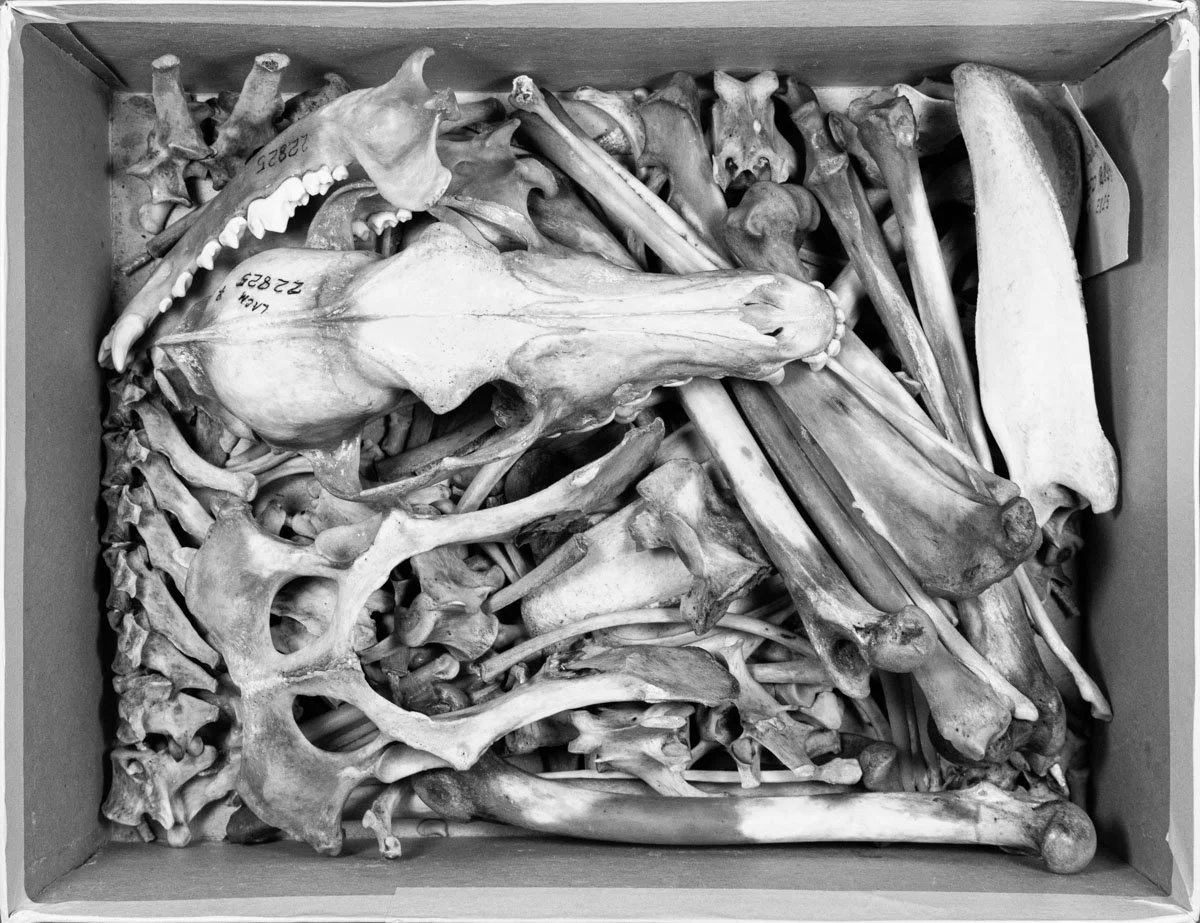
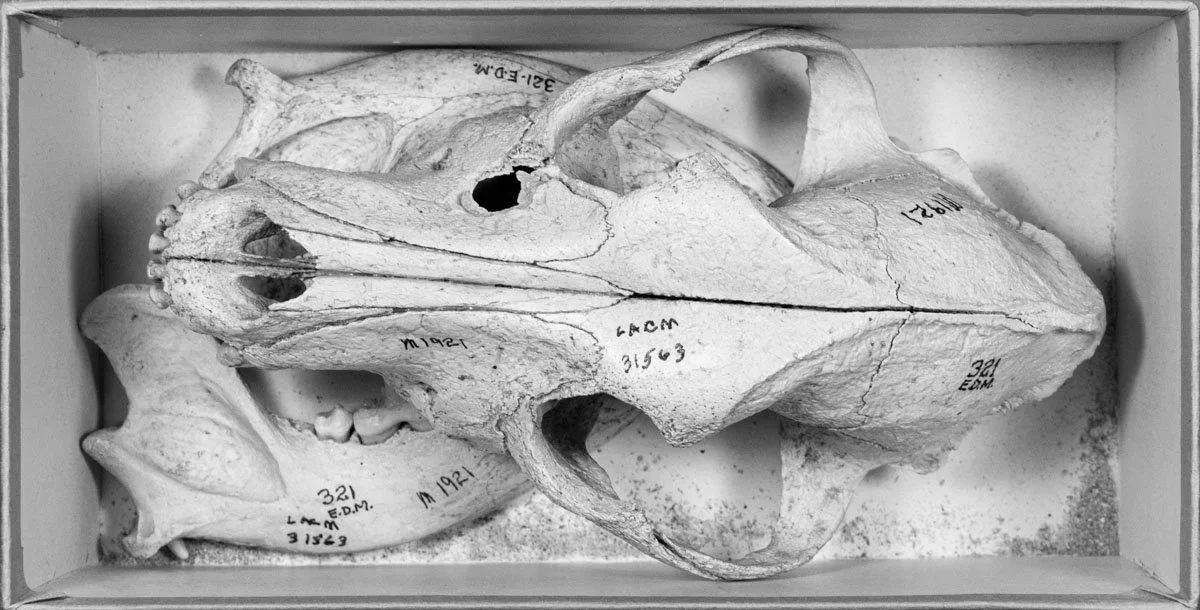
What does it mean to archive a specimen, but not a life?
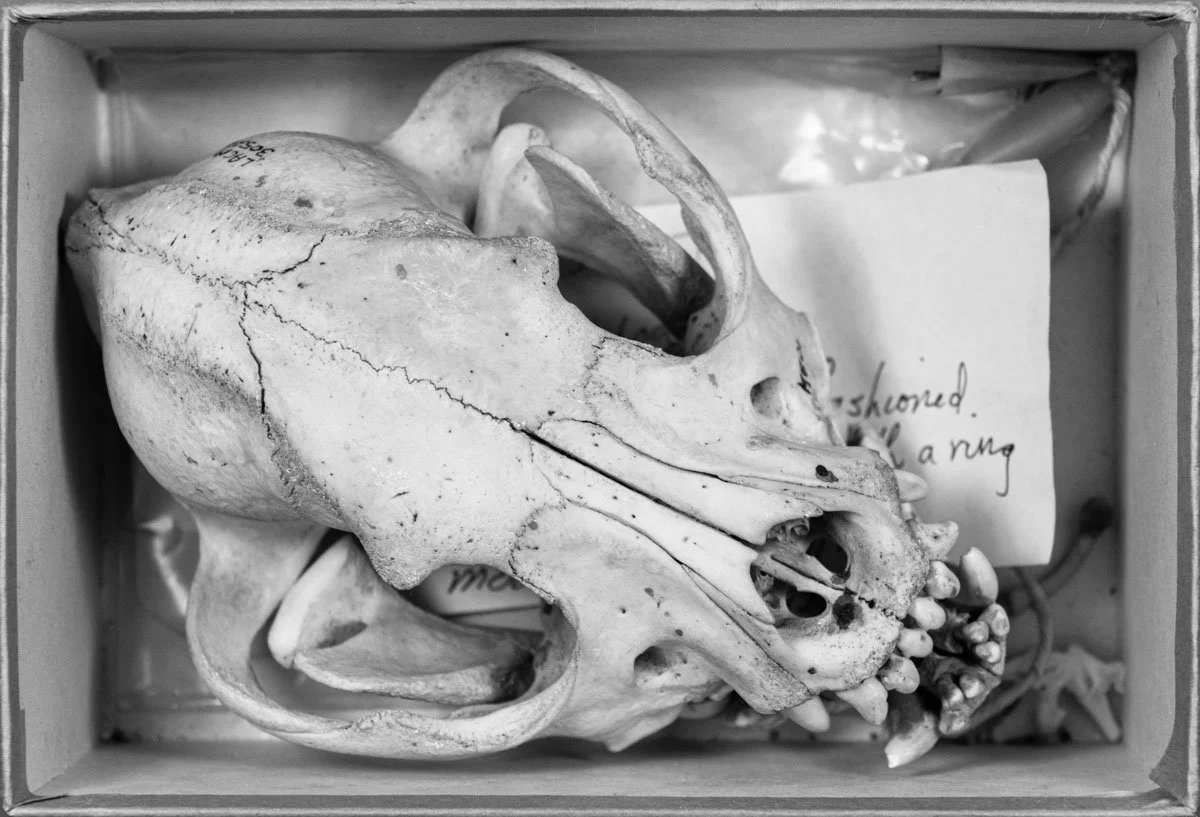
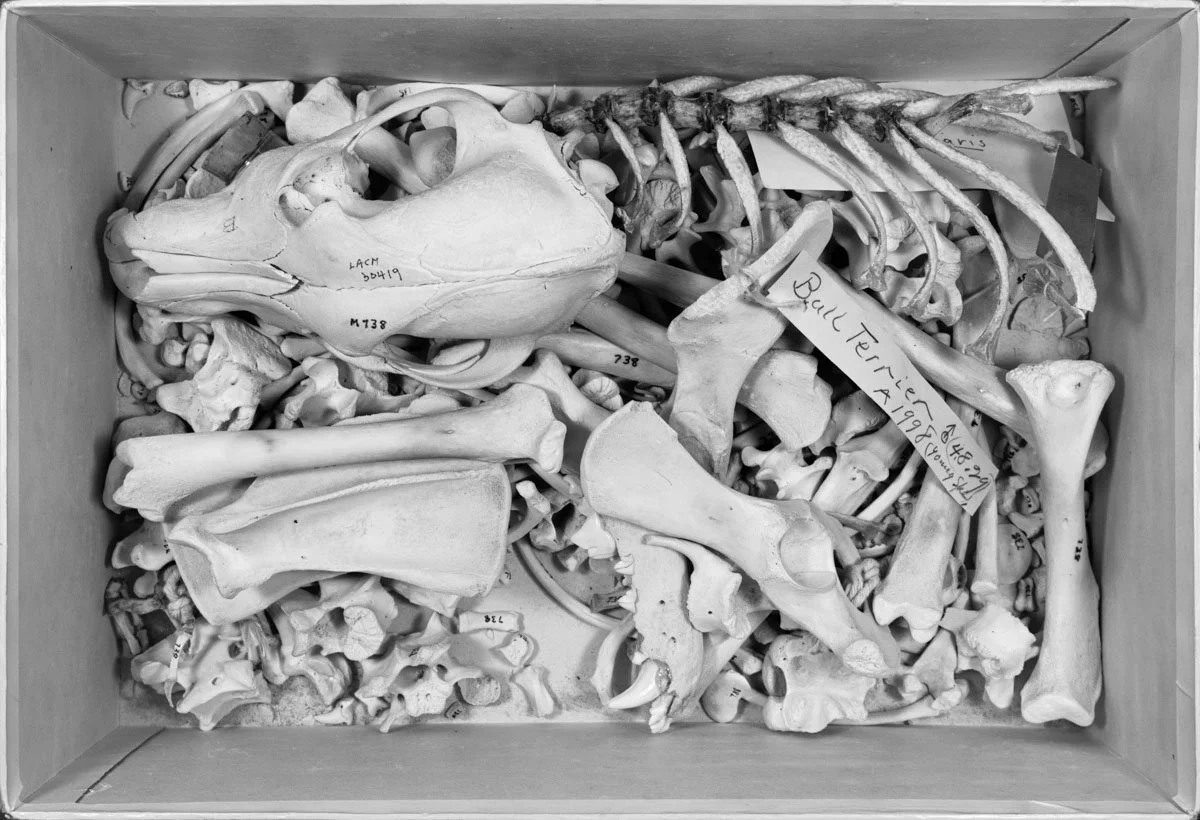
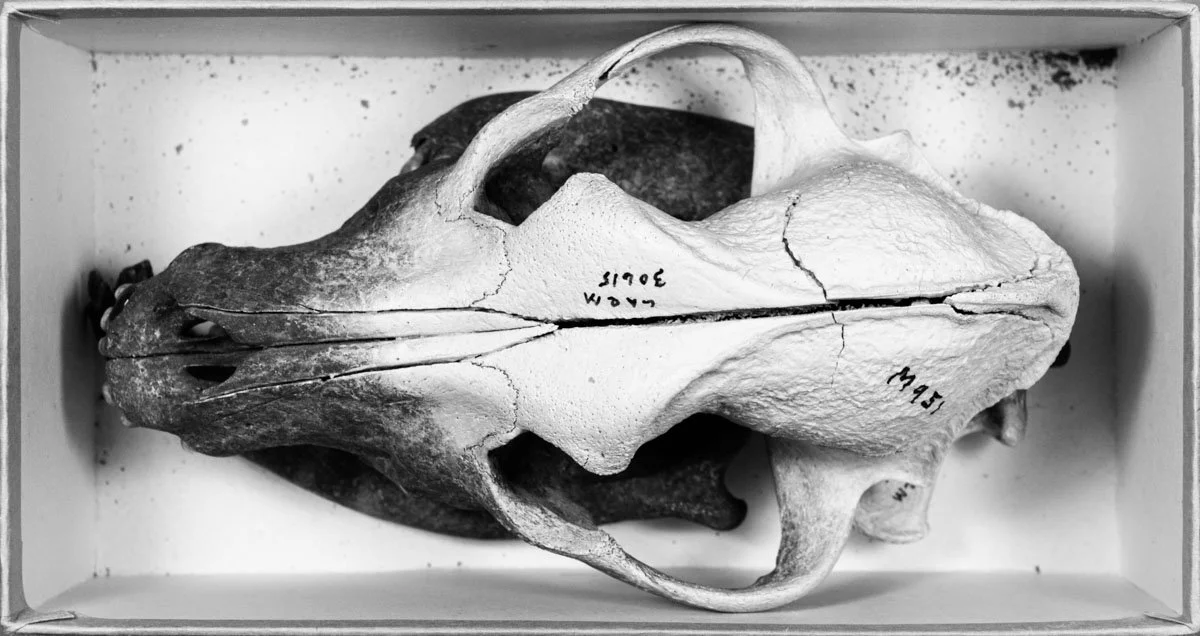
These dog skeletons and skulls are stored in boxes in the mammalogy collection of the Natural History Museum of Los Angeles County. Many entered the archive in the early 20th century, when veterinarians, collectors, and researchers preserved unusual skulls or anatomical curiosities. The dogs were cataloged as specimens, measured, numbered, and filed away.
Yet dogs occupy a strange place in natural history collections. As domesticated companions, they are often considered less scientifically significant than wild species. Perhaps too familiar, too close to us. And so many of these remains rest disarticulated in drawers. Their bones are preserved, but their lives have largely vanished from the record.
THE BOXED DOGS
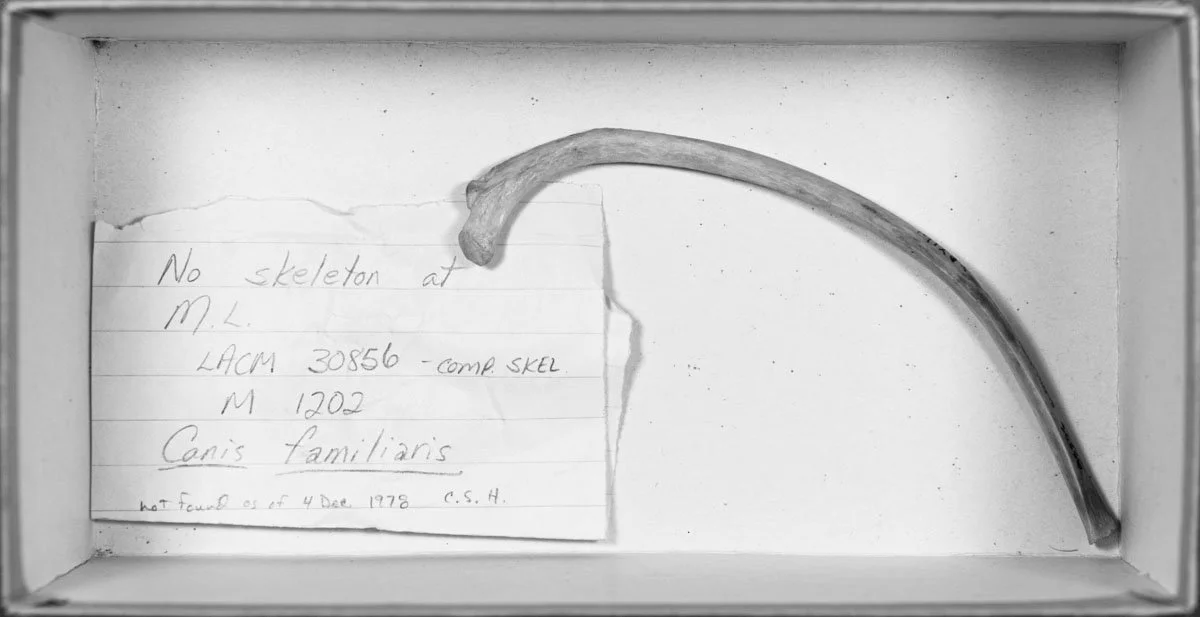
The catalog entry for this specimen says: 30856 - 5268 complete skeleton of Dalmatian. Coll by R. Burdock, 11 Aug 1932 from Los Angeles, California. But only one bone is found in the box. A note in the box states that as of Dec 4, 1978 the full skeleton cannot be found. Museum of Los Angeles County, Mammalogy Department, Catalog Number LACM 30856 / M 1202. © Sophie Gamand, 2025.
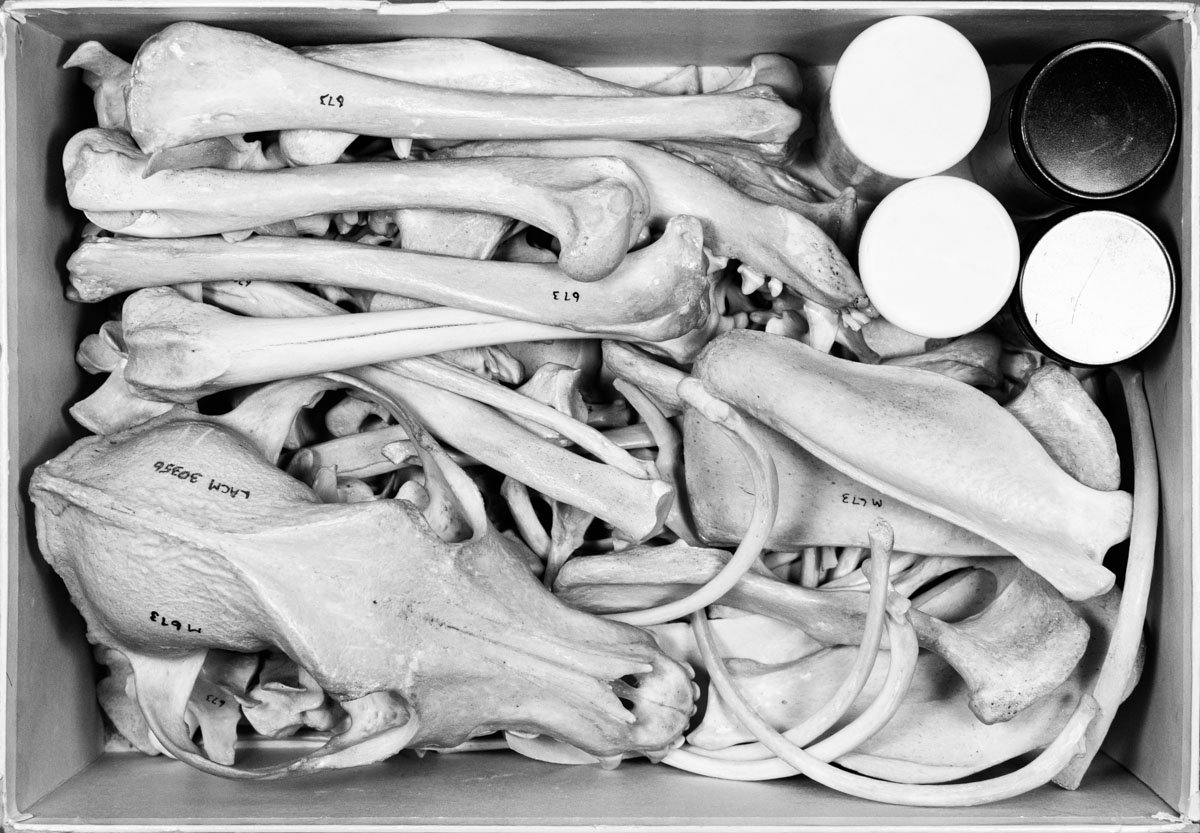
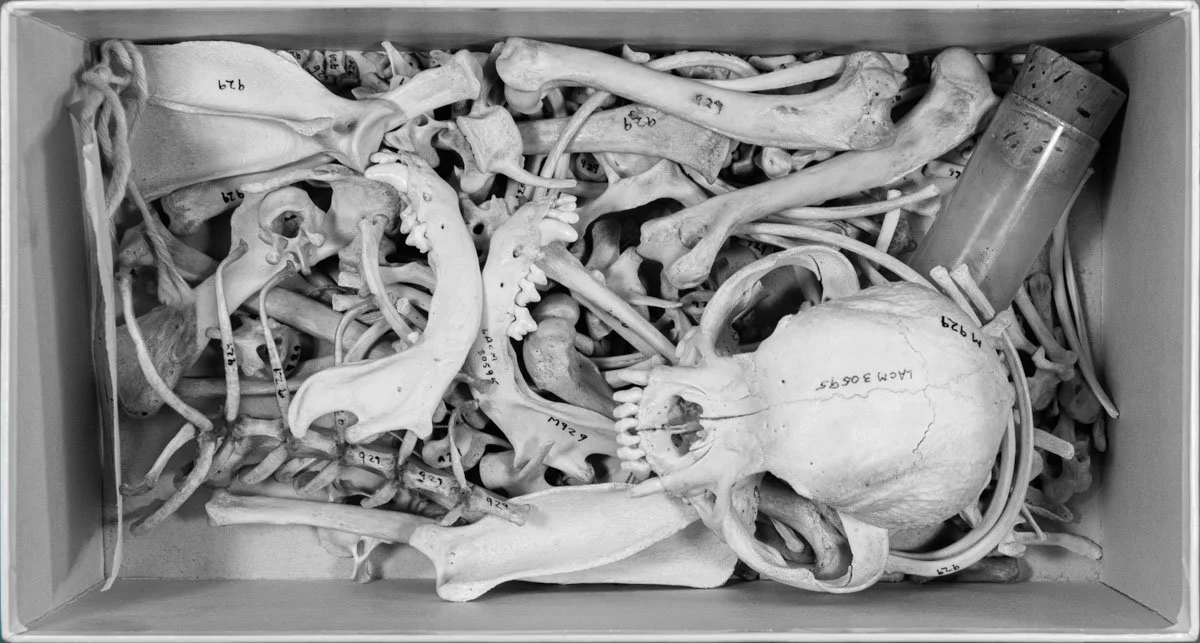
Parts of a Pug Skeleton, Male (1930). Natural History Museum of Los Angeles County, Mammalogy Department, Catalog Number LACM 30595. © Sophie Gamand, 2025.
To archive a specimen is to stabilize a body for study. But what does it mean to preserve bones without preserving the story of the being they once belonged to? These animals lived intimately alongside humans, sharing our homes, working for us, roaming our streets. Who were they? Companions, workers, strays, experiments? Who held them, who relied on them, who mourned them?
Animals do not consent to becoming specimens. In death, their bodies may continue to serve science, but their stories are rarely told. This work looks into the archive not only as a scientific space, but as a site of absence—where bodies remain, but lives have been reduced to numbers, labels, and fragments.