INSTALLATIONS

The red frame
Video installation. Artificial and preserved plants. 2018.
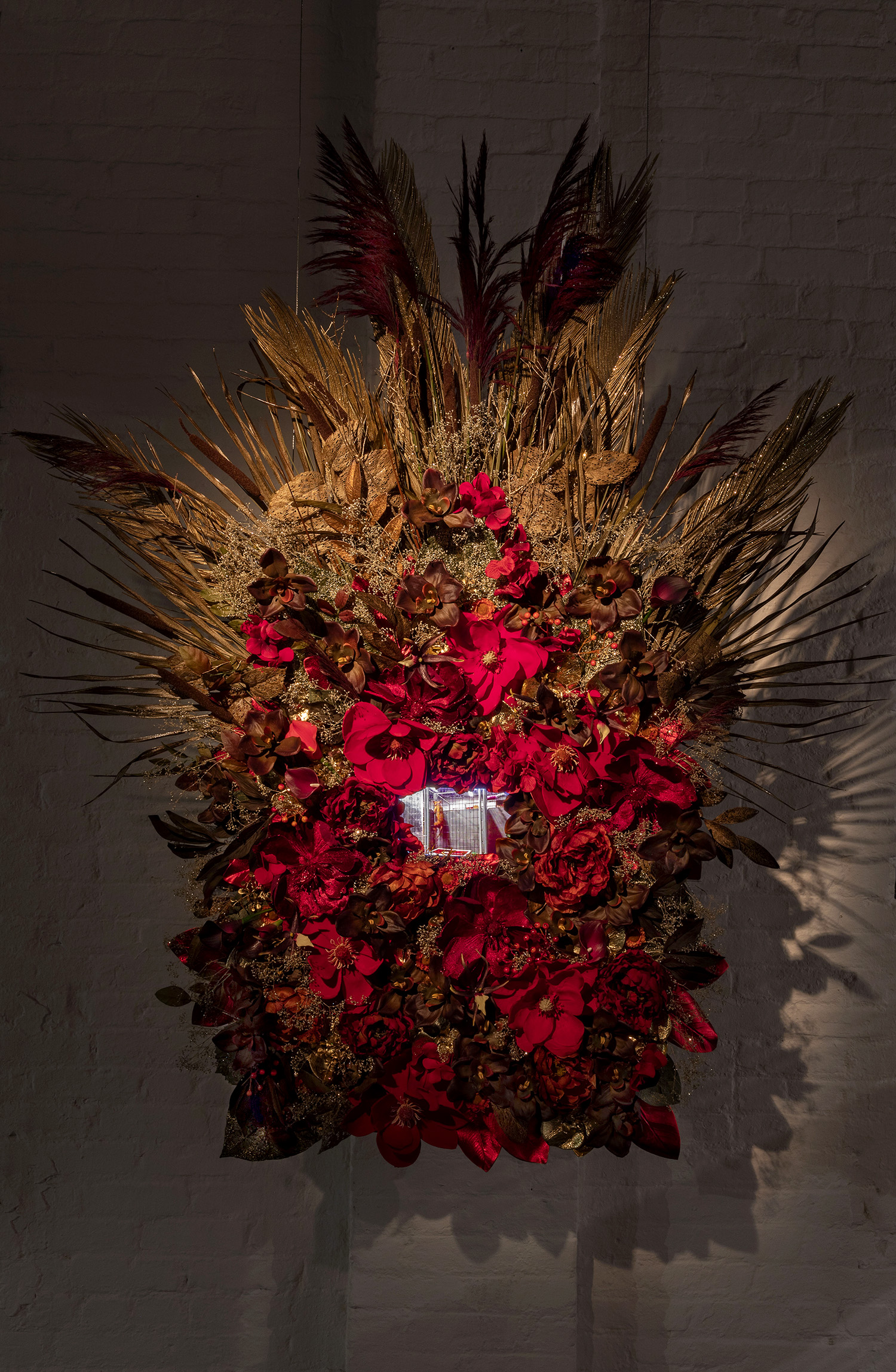
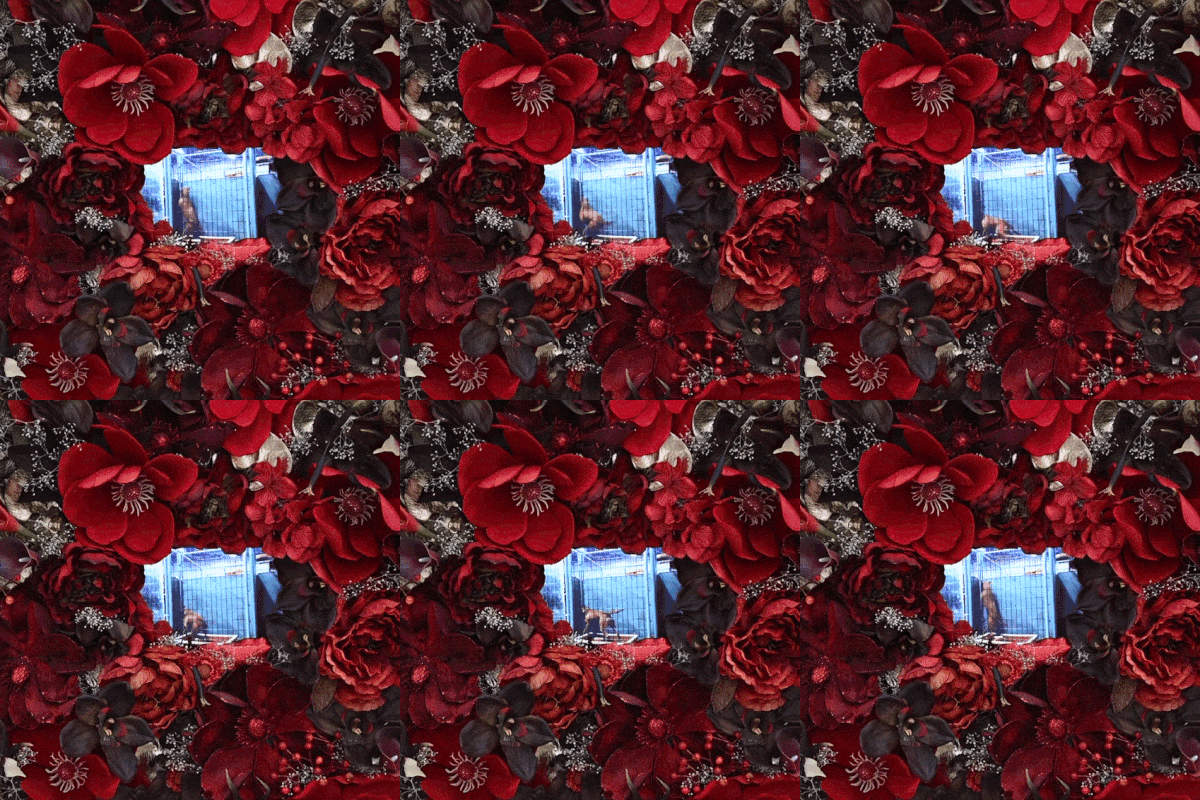
Although many dogs do fine in the shelter environment, the lack of enrichment and interactions can be akin solitary confinement for these highly social animals, and lead to severe mental issues. In shelters that don’t euthanize unless the animal is too far gone, the wait for a home can last a lifetime. Over the years, I have met dogs who had been waiting up to 10 years in a cage. With saving a life, comes huge responsibilities. The rescue community often saves animals at all costs. But what does that mean? And who really pays that cost?
Connor was a high-strung pit bull who was desperately trying to connect with potential adopters walking among the kennels. He was adopted.
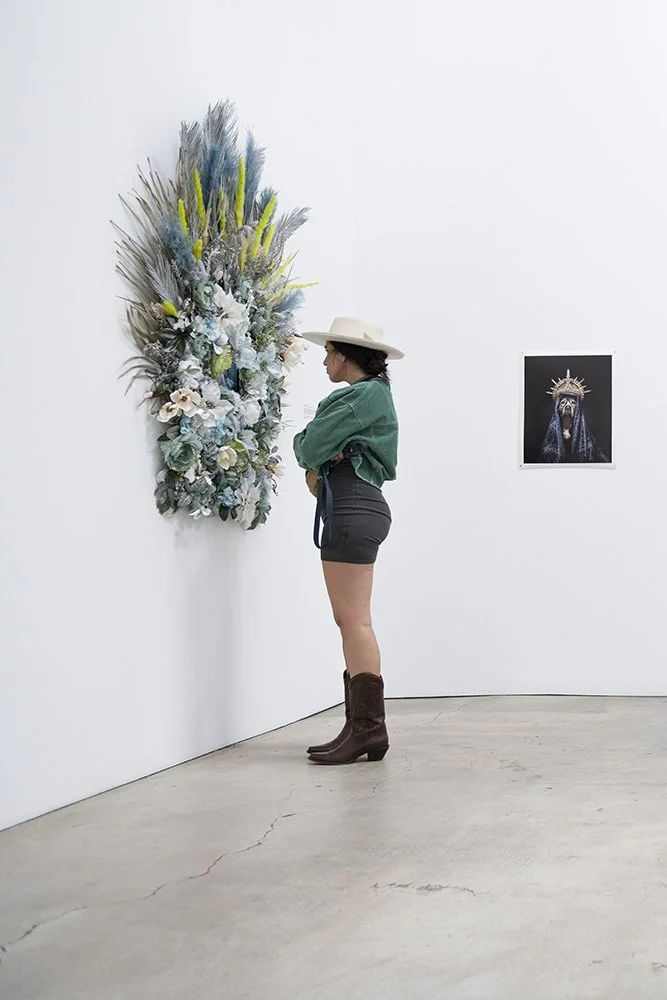
The SILVER frame
Video installation. Artificial and preserved plants. 2022.
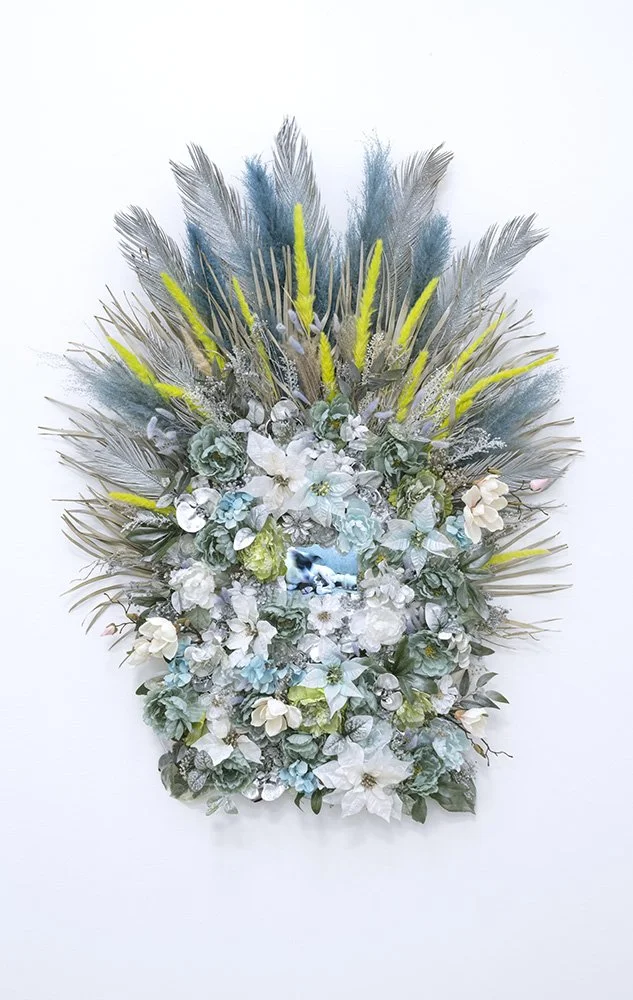
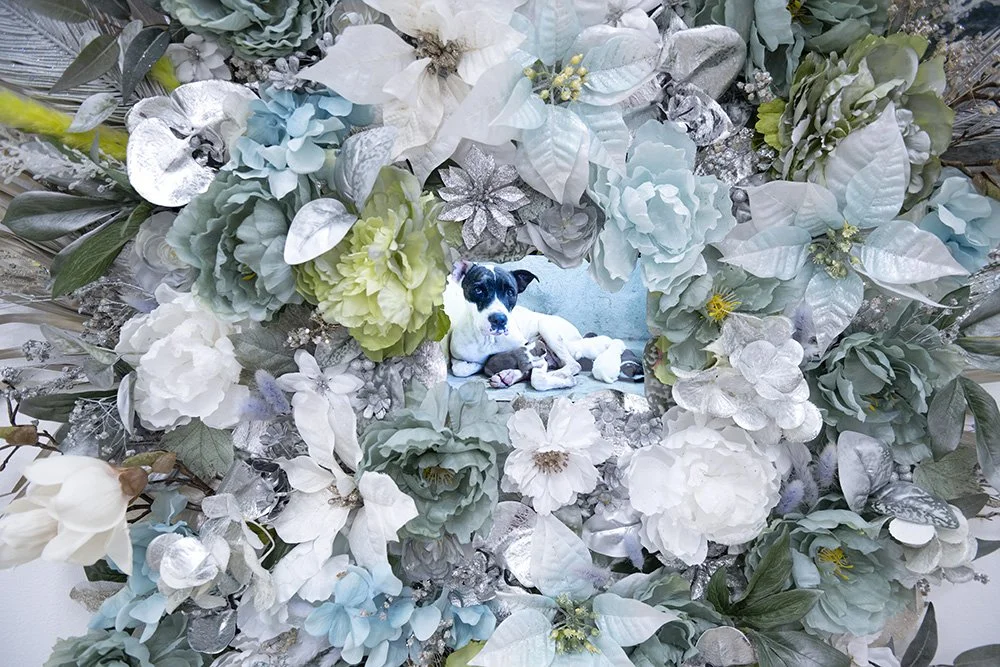
A mother and her puppies await death at an animal control facility in Puerto Rico (2016). With a death/euthanasia rate of over 90%, this shelter prioritized small fluffy puppies for the adoption floor. Most other dogs either died of illnesses (parvovirus and distemper are prevalent there) or were euthanized for space. The shelter averaged less than 20 adoptions a month, while their intake was a never-ending stream of unwanted animals.
This mother was kept alive while she nursed, in case she could help feed more newborns coming in, and in the unlikely chance a family might want a puppy of unknown breed mix. The survival rate for newborn puppies is near 0% in such places.
PICK ME
Velvet, red yarn, metal clasps. 2018.
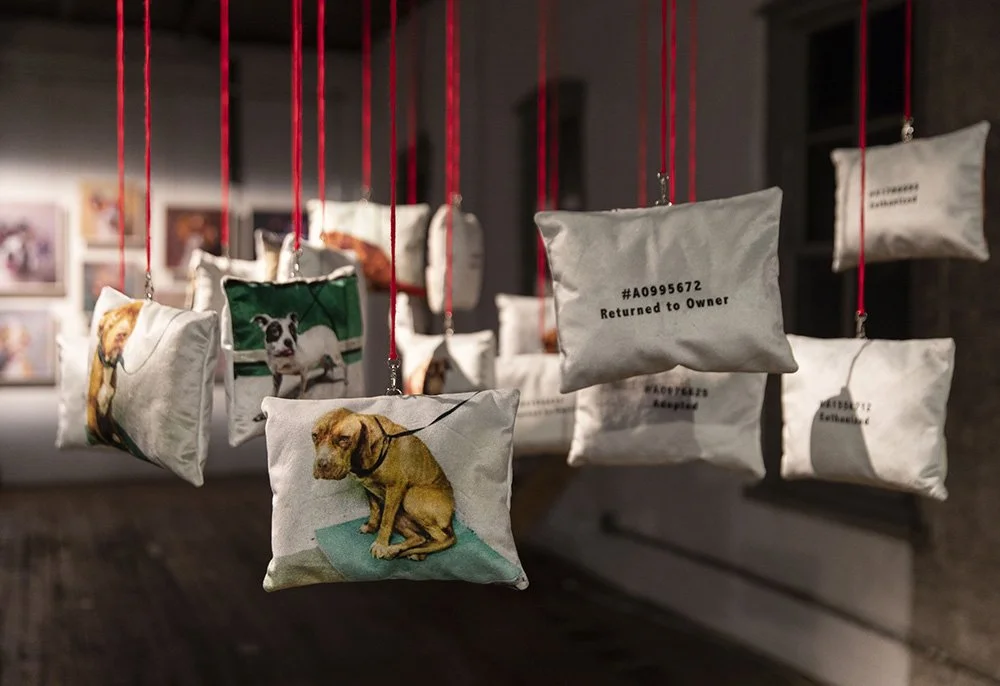
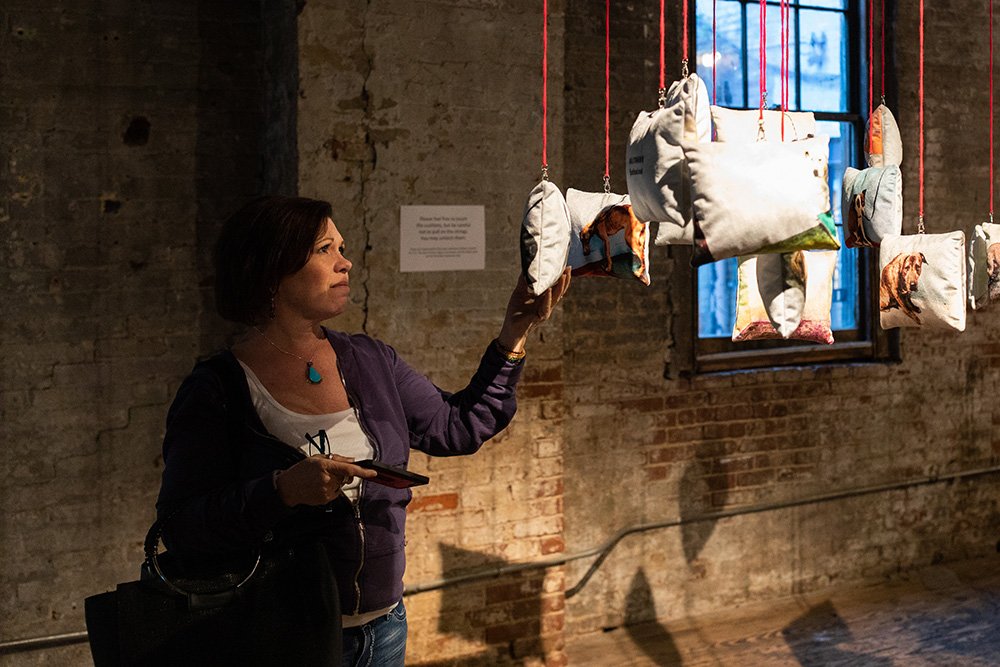
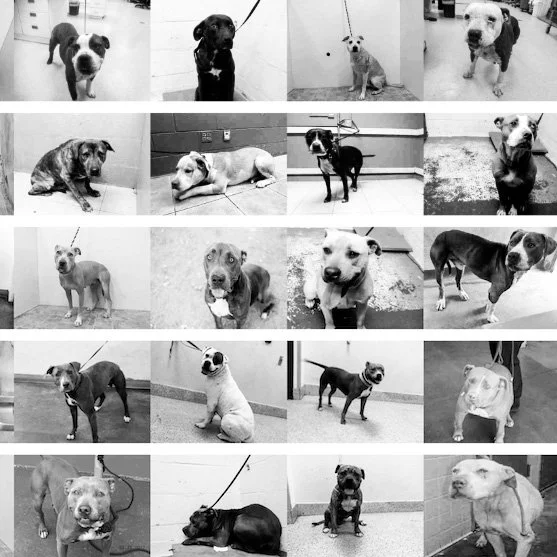
This is an interactive installation. Pillows were made using intake photos from various city shelter around the U.S. each pillow featured an ID number and the fate of a dog (adopted, returned to owner, euthanized).
Open intake shelters are mandated by cities to welcome all strays and owner surrenders. They may not turn any animal away. For that reason their intake numbers can be astonishing. In cities like New York or Las Vegas, an average of 80 animals a day have to be processed, every day, all year-around.
As soon as an animal comes in, it will be assigned an ID number, a tag, and its photo will be taken while the animal is briefly assessed medically and behaviorally. Although the use of digital photography has greatly improved the intake process, in many open-intake shelters, the dogs’ intake photo is taken hastily, sometimes with a webcam. The dogs are often stressed, scared, ill, injured. The photo is sometimes the only chance these dogs will have to find a home.
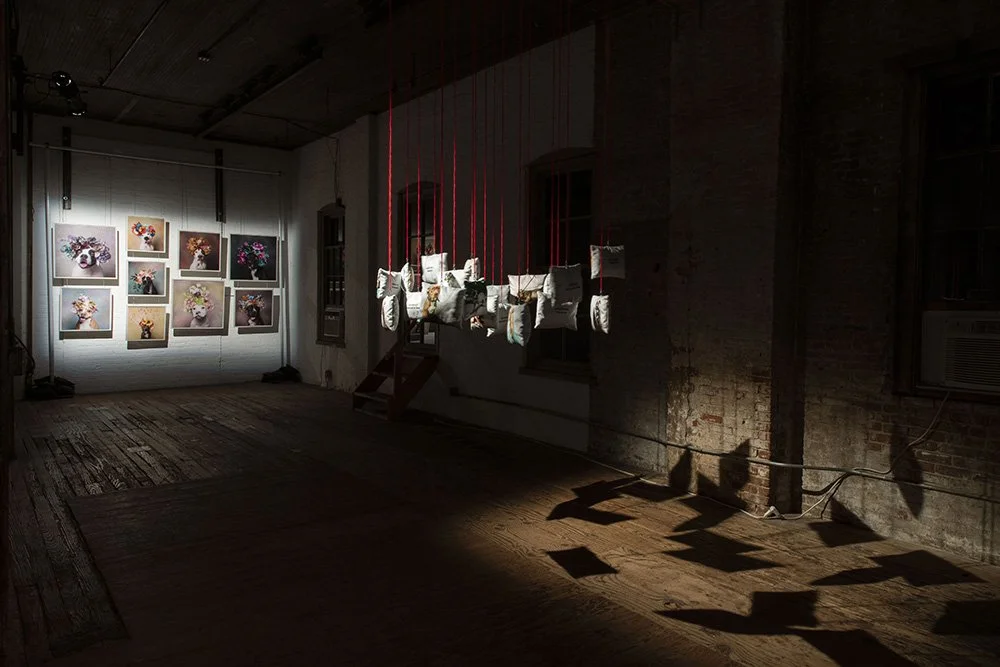
Some of these dogs will be returned to their owners, others will be adopted, many will be euthanized. This is the cruel lottery for shelter animals. For the purpose of this installation, the ID numbers and statuses were assigned to each dog randomly. The real fate of the dogs pictured here is not known.
The pieces are meant to be picked up, petted, establishing an emotional connection between the viewer and the distressed animals.
COLLARS
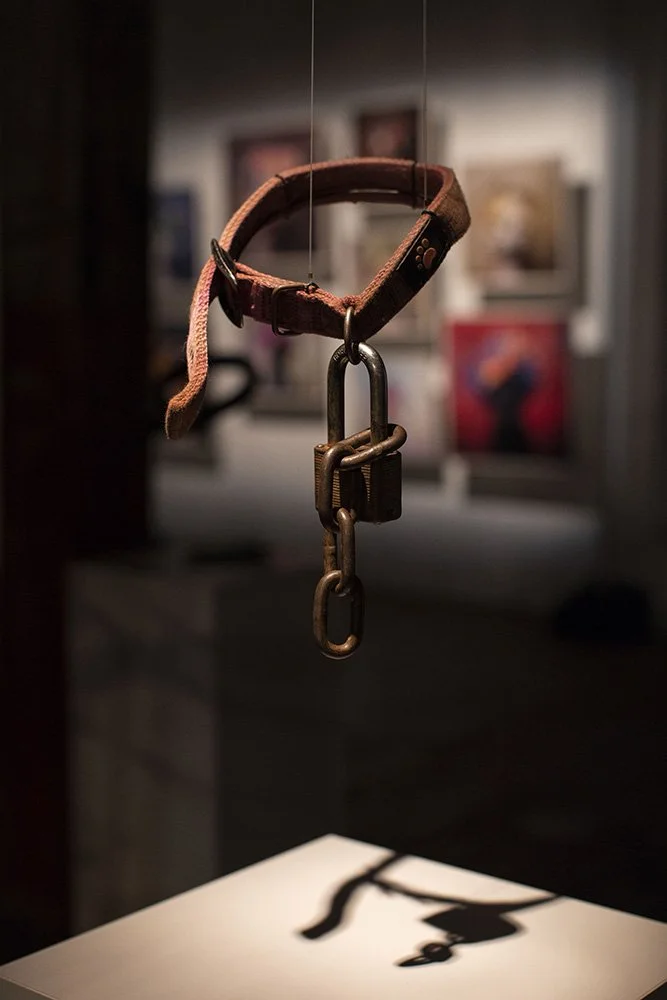
Dog collars, Chains, Padlocks, 2018.
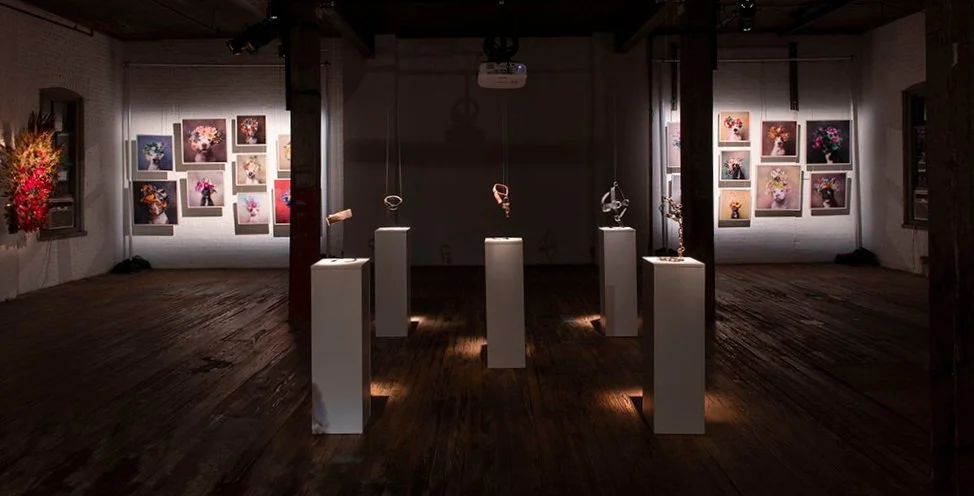
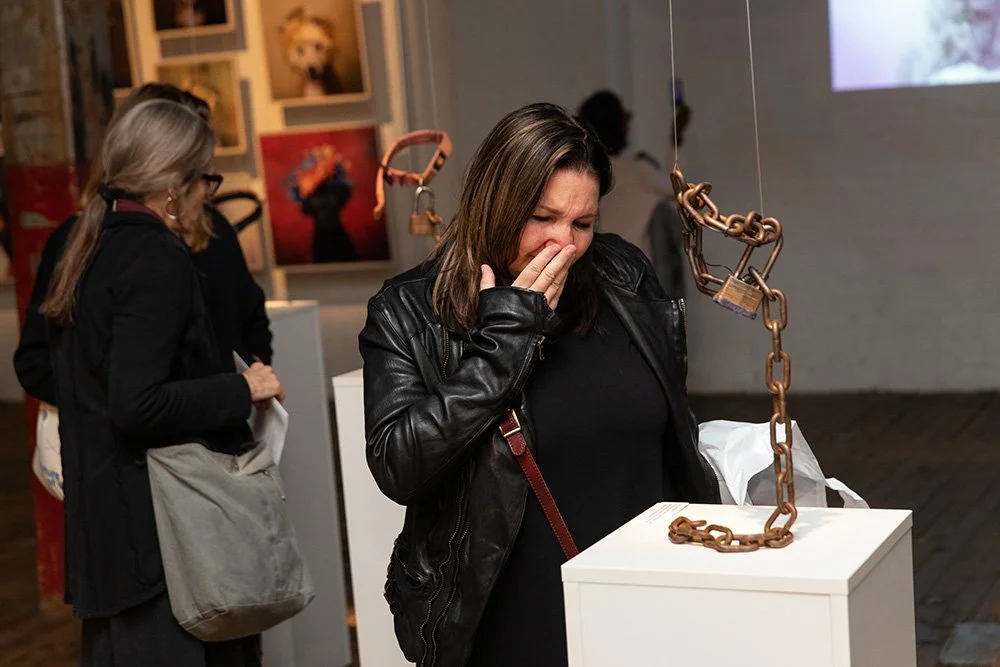
These collars and chains were removed from dogs during intake at a city shelter in Atlanta, Georgia. Some of the dogs had been seized by the Police in cruelty cases, others were surrendered by their owners, still wearing those. Each piece was accompanied by the story of the dog, sometimes ending in euthanasia.
The padlocked chain is strongly linked to the dogfighting culture. Dogs are chained to poles, their necks weighted down by concrete blocks.
In January 2019, the clothing brand Forever21 released a hoodie featuring a pit bull wearing a heavy padlocked chain around his neck.
YOU CANNOT CLAIM
Fake fur. Interactive piece. 2022
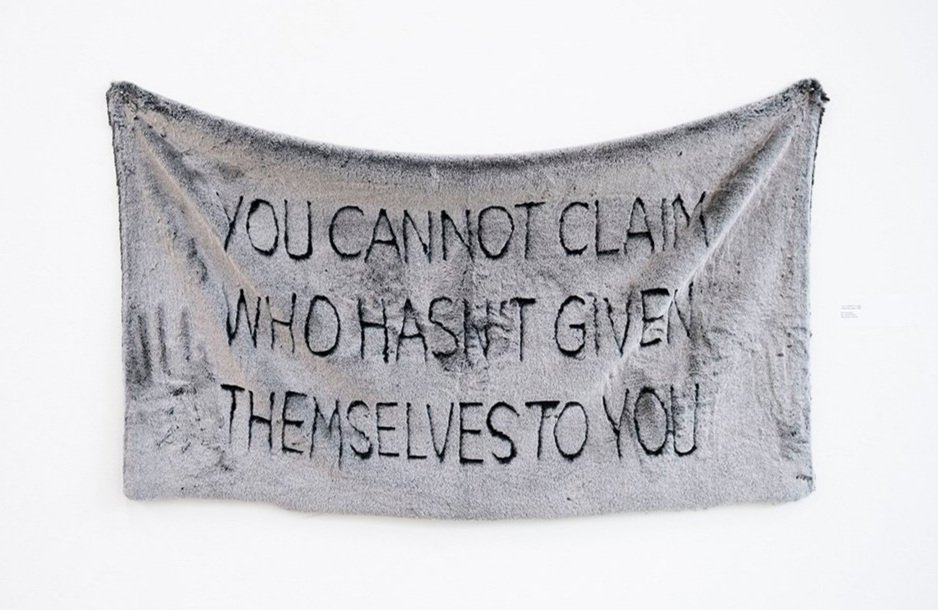

You can touch.
You cannot touch.
What do you choose?
EXODUS
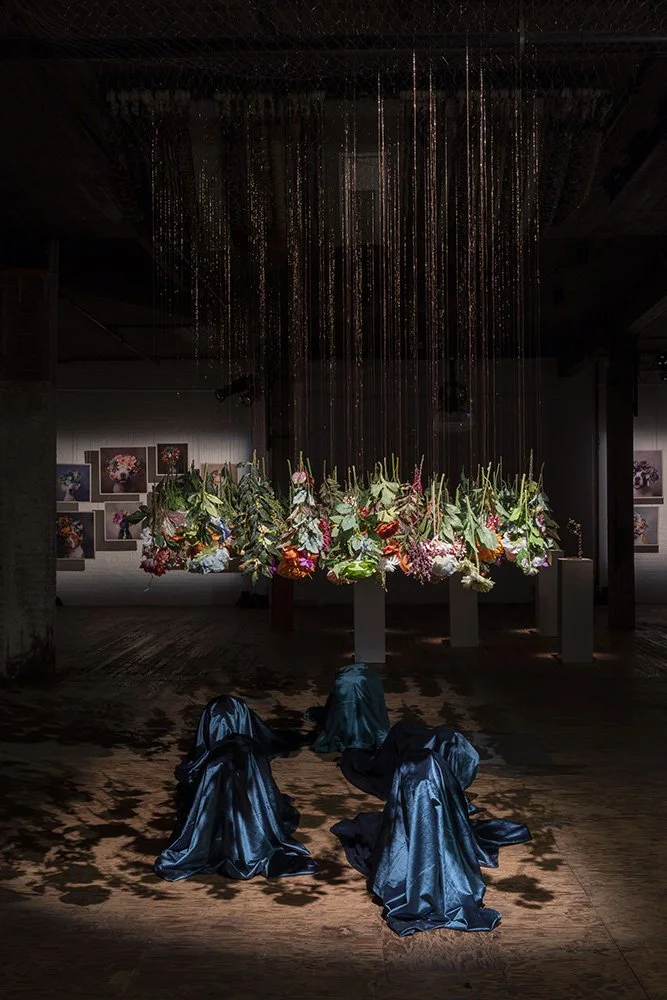
Velvet, fake flowers, copper wire. 2018