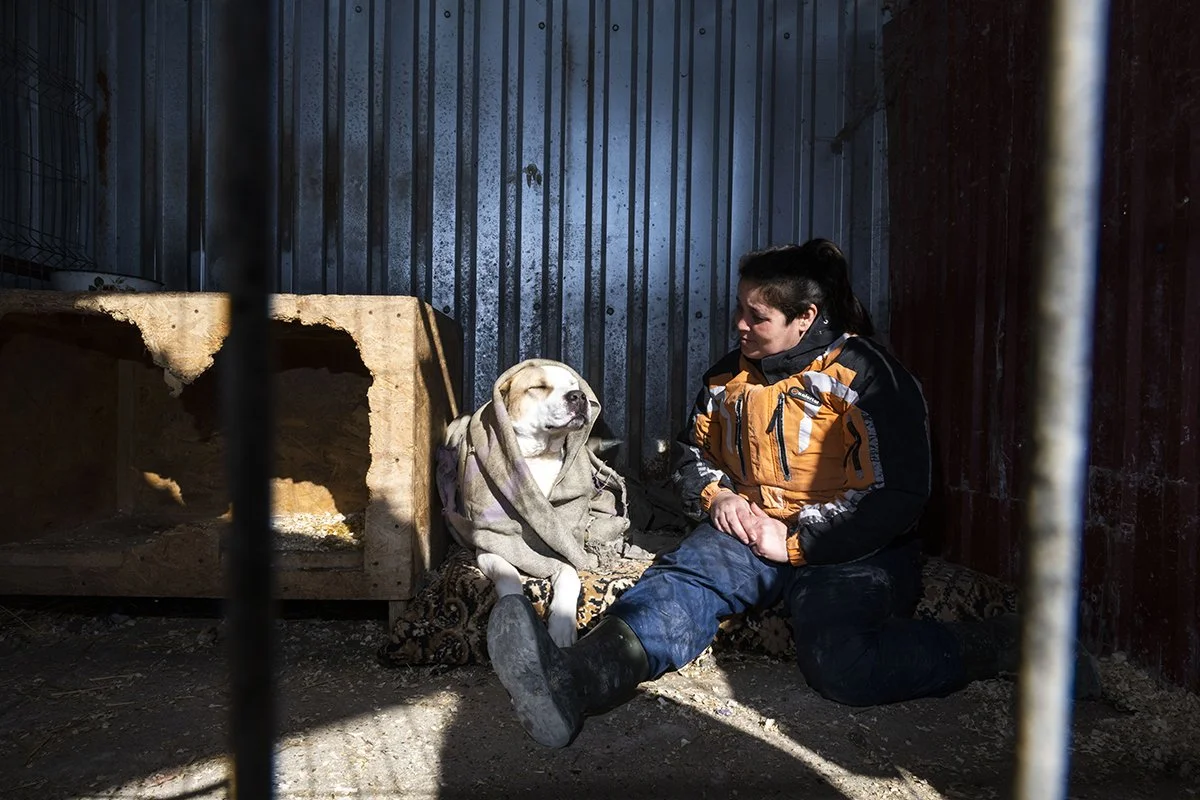
A shelter worker comforts a dog in his kennel after his kennel mate passed away. Moldova.
By Sophie Gamand (Artist, Animal Chaplain).
From my very first experiences with animal rescue and the shelter system, my ethical lines were challenged. Sometimes it was a shelter worker handling a dog roughly during our photoshoot. Sometimes it was a rescue snatching a dog off the street without asking around to see whether the dog was simply lost and already had a family. Sometimes it was visiting a No Kill shelter and witnessing the distress of hundreds of dogs crammed into kennels for years on end.
Time after time, my ethical boundaries and my values have been challenged, expanded, or violated within the shelter and rescue system. And through these experiences, I have had to both define and redefine my values, and accept when there was nothing I could do (or was there?). This led me to become more rigid in some ways, more confused about my values in other ways.
We all get into animal care (veterinary clinics, rescues, dog training…) because we love animals, because we want to make their lives safer and better. Because we cannot stand the idea of not doing anything to help them. And yet, in the systems we operate in, we are exposed to processes, stories and decisions that can rub firmly against our ethical lines.
Over time, our values might be challenged in more ways than one. It is a very subjective topic that comes with a heavy, quiet lingering feeling. “Something isn’t right” you may think, but you already have to move to the next task. There is always another emergency, another ethical quandry, and this leaves little time for self-reflection or healing.
What many of us experience has a name: moral distress. And when it accumulates, or cuts too deeply, it can become moral injury.
I decided to write this post not as a way to pathologize or blame, but rather put words to our shared experience, and offer tools and healthier coping mechanisms.
Defining Moral Distress & Moral Injury
There are four levels to consider:
1- Moral Dilemmas
A moral dilemma is when you find yourself in a situation that requires you to choose between two courses of action, one of which transgresses your moral principles or values.
Example: you are invited to a Thanksgiving dinner. You are vegan but you know everyone else will be eating meat. Do you still go?
2- Moral STRESS
Moral stress starts showing up when the dilemmas pile on. When it comes to fields like animal rescue, both moral dilemmas and stress are inherent to the work. You cannot really escape the contradicting forces at play, and the stress that comes with having to balance out your ethics and values with the reality of the field.
3- Moral Distress
Moral distress happens when the dilemmas and stress aren’t addressed properly, and fester. This is when you know what the right or compassionate thing would be, but can’t act on it due to systemic, institutional, or interpersonal barriers. You start to have this repeated feeling that your values are not being respected. This state is not a normal part of the work, and it is important to find support if you are facing moral distress.
Example: you want to provide more care to the animals, but resources are limited. You want to save an animal’s life but policies or legal constraints prevent it. You are witnessing suffering that you cannot stop.
4- Moral Injury
Moral injury is a state you find yourself in, when moral distress happens so often that you feel you have become a part of the system and your moral conscience has been injured. This is a more lasting emotional/spiritual wound and can greatly impact your ability to cope with the world. You may feel guilt, shame, moral disorientation, and societal alienation. You may feel anger, disgust or even hatred towards others or yourself, or society at large. You may feel like you have sold out to the system, that you don’t know what is right anymore. You may start shaming others (“They are wrong” or “They are bad”, or “How could they do this?”).
Example: Feeling complicit in systems that cause harm. Participating in euthanasia decisions that conflict with your values.
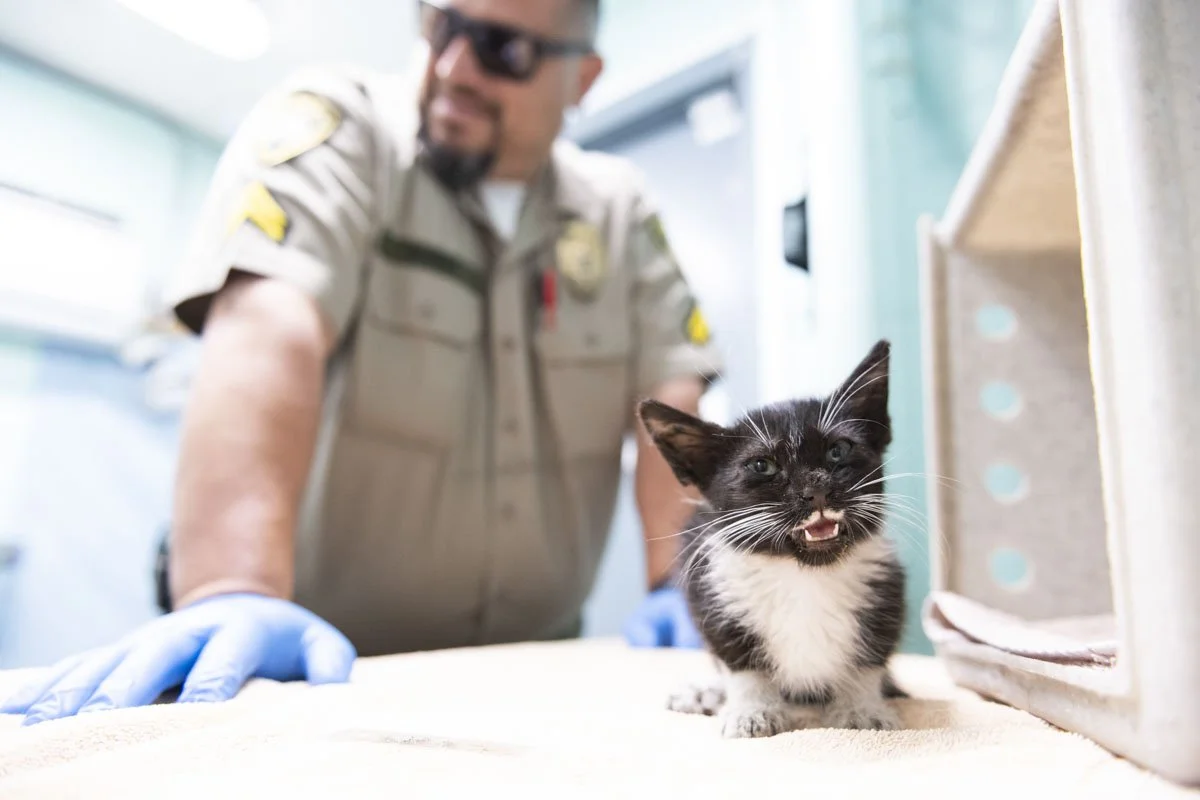
An animal care officer waits for the veterinarian to check a kitten he brought into the shelter. Los Angeles.
How Moral Distress Becomes Moral Injury and leads to Moral Reactions
Distress becomes injury when repeated unresolved distress accumulates, like moral scar tissue. There is an accumulation of moments that contradict personal values and can erode moral identity (“I used to know why I do this work; now I’m not sure anymore”). Silence around these issues, or lack of communal processing, or even invalidation from leadership can deepen the wound.
Example: euthanizing healthy animals due to lack of resources, week after week, with no space offered to grieve or reflect.
The way we react when we are in moral distress or injury are moral reactions, and they are not just about what is objectively “right” or “wrong”, but rather what we personally believe is “right” or “wrong.” Moral reactions are deeply rooted in our unique, personal emotions and psychology.
Why This Matters in Animal Care Work
The frequency and intensity of moral challenges in shelters and vet clinics make these environments ripe for moral distress/injury. These are places where policies tend to prioritize efficiency or liability over individualized care. There is often chronic underfunding, staffing shortages, unrealistic expectations. In the shelter system, the cultural tension between the idea that we must “save them all” and the cruel reality that this might be an impossible task, can lead to complex ethical decisions around euthanasia, overcrowding, or gaps in care.
In the world of rescue, this can look like: deciding which dog to pull off the street, deciding to leave an animal with their family when their standard of care doesn’t match ours, or prioritizing where we allocate resources (medical cases? Spay and neuter?).
Many workers and volunteers internalize the guilt, believing they are “not strong enough” or “not good enough,” when in fact they’re navigating impossible moral terrain.
Unaddressed moral injury can lead to burnout, compassion fatigue, cynicism, or leaving the field. It can foster a lot of conflict in shelters or among rescue groups, cliques being formed, “us versus them” mentality. When in reality, everyone is caught in the same impossible system that was not designed for ethical health, but “efficiency.” Also, everyone has different sets of values or ethical lines. What might be ethically important to you, might not be as important to someone else, and vice versa.
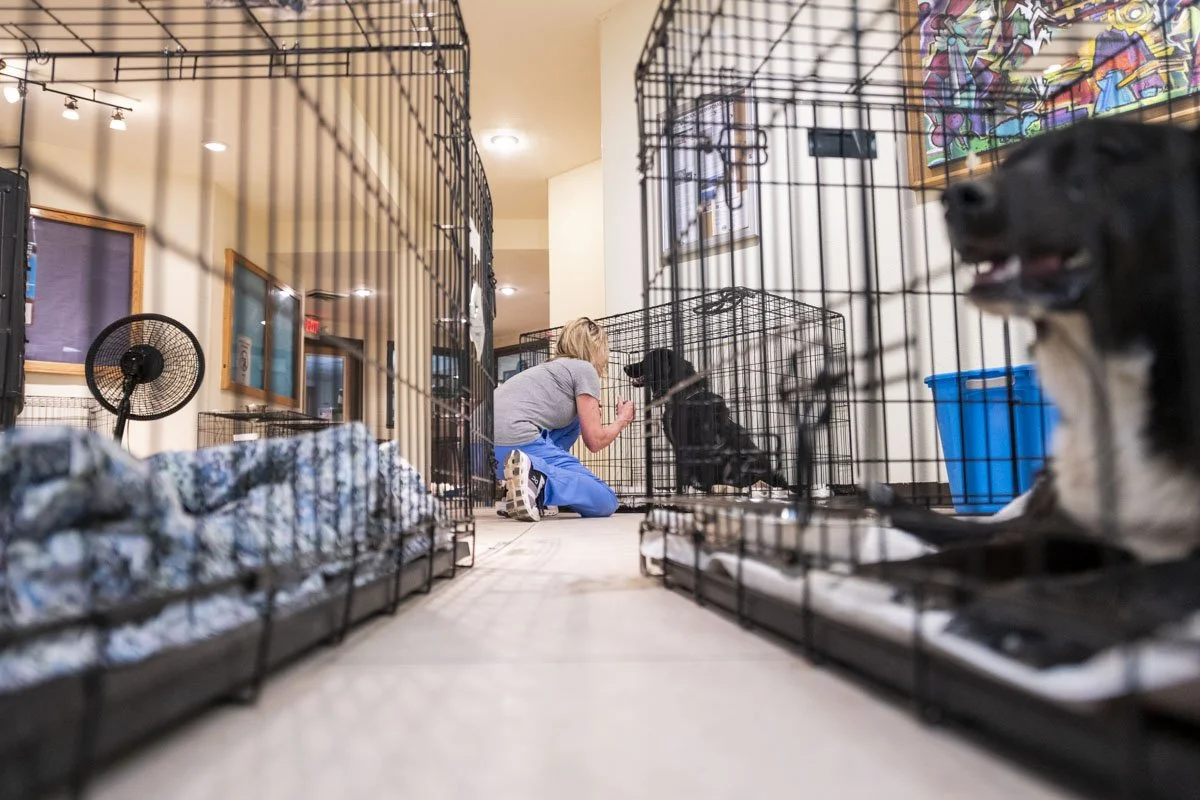
A volunteer tend to a dog during a spay/neuter clinic in Navajo Nation.
Finding a Path Forward
Our suffering grows when we struggle against that pain instead of meeting it with awareness and compassion.
It can be difficult to find our way out of moral distress or moral injury. Fear can feed into it and suggest that the world is not a safe place. “When I try to speak up, it’s invalidated / I’m punished.”
But at the same time, our moral reactions can help perpetuate a feeling that nothing can ever get better. It perpetuates the narrative that we are stuck and powerless. And it can contribute to creating an emotionally or psychologically unsafe environment for ourselves and our coworkers, where conflict, shaming and anger prevent open communication and even healing.
Moral injury is not only about what happened, but how we respond to it: the stories we tell ourselves, the judgments, the avoidance. Healing involves changing one’s relation to those internal experiences, not simply eliminating them.
Here are practical suggestions on how to find a path forward, with many ideas you can find in great handbook “The Moral Injury Workbook.”
Recognize that healing may require holding paradox: You hold two truths: what you value, and the fact that you were hurt, or have failed, or have witnessed something bad. It’s not about excusing, but about integrating the moral pain into a life directed by what matters.
Name and Acknowledge moral pain rather than suppress it. Giving language to the experience is itself healing. It’s important to name your feelings with someone who is safe (a friend, a therapist, an animal chaplain…). Naming the feelings is very powerful. And sometimes that looks like: “Yes, I had to make a decision between two really shitty options. I made one. Ok.”
Clarify Values: Remember why you entered this work; let those values guide your actions, even when circumstances are imperfect. For every time your values were violated, there were likely many other times when your values made a huge positive impact, and still can. Also, it’s ok for your values to change over time too. As you learn more about your work and the reality out there, you might change your stance. It doesn’t mean you are betraying your values. It can simply be a sign of growth or expansion. Sometimes it feels like the more we know, the more confusing these systems of values become. Taking a moment to (re)clarify our values every once in a while can be helpful.
Create Moral Communities: Spaces where staff/volunteers can talk honestly without judgment (support groups, debriefs, rituals). This requires us to soften our stances, keeping an open mind and fostering safe spaces. Remember that your ethical lines and values might differ from that of others. That you don’t know everything. You might be missing crucial context as to why a person feels strongly and differently than you do about something.
Practice Mindfulness / Present Moment Awareness: Making room for moral pain instead of letting it silently harden into shame. Sit with the pain. Somatic work can be a great tool. When the feeling comes up, notice it gently and sit with it. Breathe into it. Be curious about the feeling. Where does it live in your body? Can you describe it? Is it in your toes, or in your chest? What color is it? Does it smell like anything? Is it shiny? Prickly? Just notice it and observe it with loving curiosity. Repeat each time you find yourself being challenged. And you will notice yourself regulate more easily. Breathwork can be very useful.
Compassion & Forgiveness / Expand your Circle of Compassion: For self and others. Recognize systemic factors while honoring personal limits. Try to step back from judgements or stories, or rules you have in your mind. See those as mental events rather than absolute truths. “This happened for a lot of reasons (some of which I might not know) and it sucks.” As opposed to “These people are monsters and I hate them.” Try and repair relationships if possible, forgiving oneself and others. Not as condoning their behaviors, but as a way to release barriers to living according to your values. Try cultivating kindness and connection.
Take Committed Action / Your Voice Matters: Small, values-aligned acts that reaffirm moral identity, even in constrained systems. Even when your values are violated or moral harm happens, the capacity for moral identity remains, and can be reclaimed through values-based living and using your voice. When we are in moral injury, it can take a lot of energy to avoid facing our difficult feelings, and our world might get smaller. It actually takes a lot of our energy to feel moral outrage. But we can take that energy back and instead put it toward what matters to us more. Remember that your voice matters. Perhaps it is not safe for you to speak up at work, but you can always share with a trusted friend or professional, or even journal about your feelings and give a place for your values and voice. You could organize a ceremony of remembrance to honor that the lives taken had value and that they mattered. Any small or big action to use your voice and reaffirm your moral identity, can be extremely helpful.
Moral distress or injury doesn’t mean you are weak. It means you care deeply. And that is the hallmark of our community as animal care workers. Remember we are all carrying this together. This is work with a profound collective nature. You do not have to sit with those feelings alone. Just bring tender awareness to how you approach these feelings, how you speak about them and how you let them dictate your reactions and decisions.
As always, let your fierce compassion lead you. Healing starts with honesty, connection, and remembering what matters most.
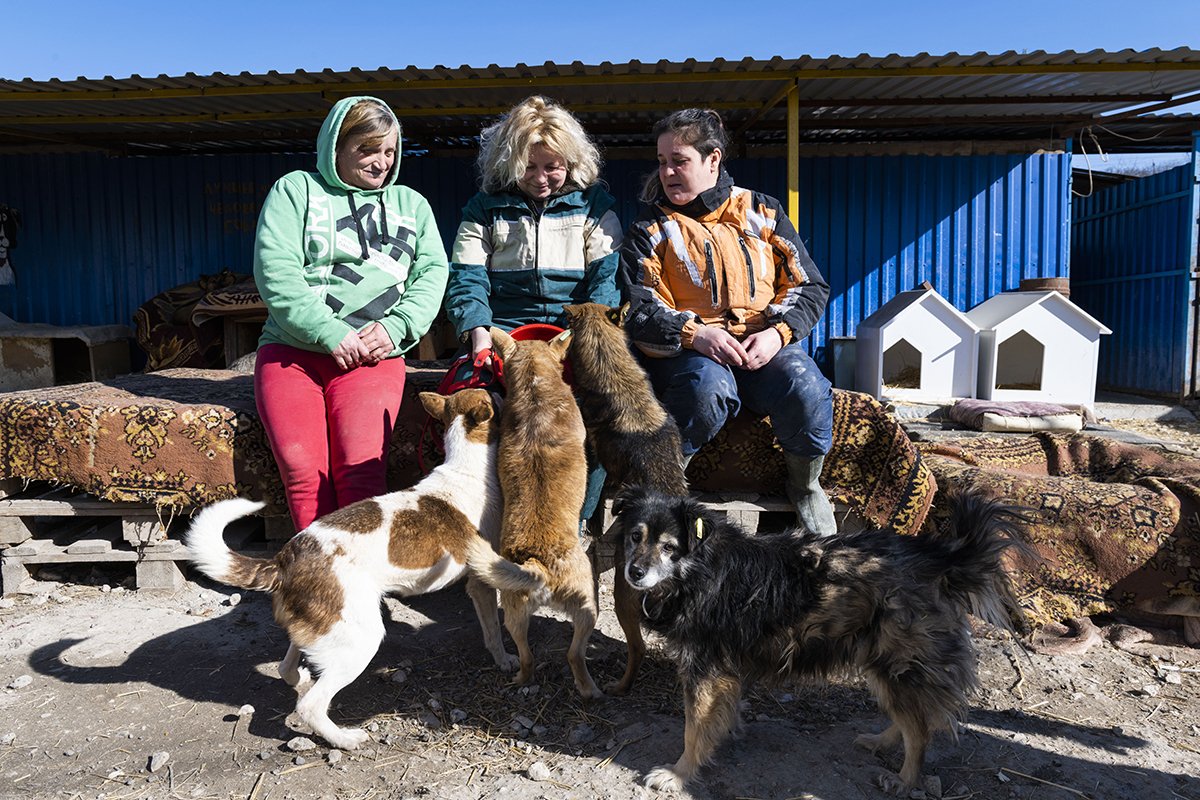
Shelter workers take a break and have a moment of community and recharge. Moldova.