“I didn’t even know I could paint that well!” Jude, 10, told his mom after he painted a portrait of Vic, an adoptable shelter dog, for the Empathy Pawject. Lending his newfound artistic skills to the Calgary-based project helped Jude connect with the plight of shelter animals and the people who care for them, giving him a sense of agency and boosting his confidence in the process. He realized he could make a difference.
CREATING PATHWAYS FOR CHILDREN TO GET INVOLVED
While there are many ways for adults to help their local animal shelter, it can be difficult for children and teenagers to join in. Concerns around safety or liability mean younger animal advocates don’t get a lot of opportunities to participate. Some shelters are trying to remedy this, and parents and teachers are getting creative too. Here are three stellar examples of such programs.
Following the success of their Book Buddies program (children visitors read books out loud to shelter pets), The Animal Foundation in Las Vegas recently launched a Sketch-A-Pet program. They provide children with sketch pads to draw the animals of their choice. The kids can take their drawings home, or donate them to be displayed by the animal.
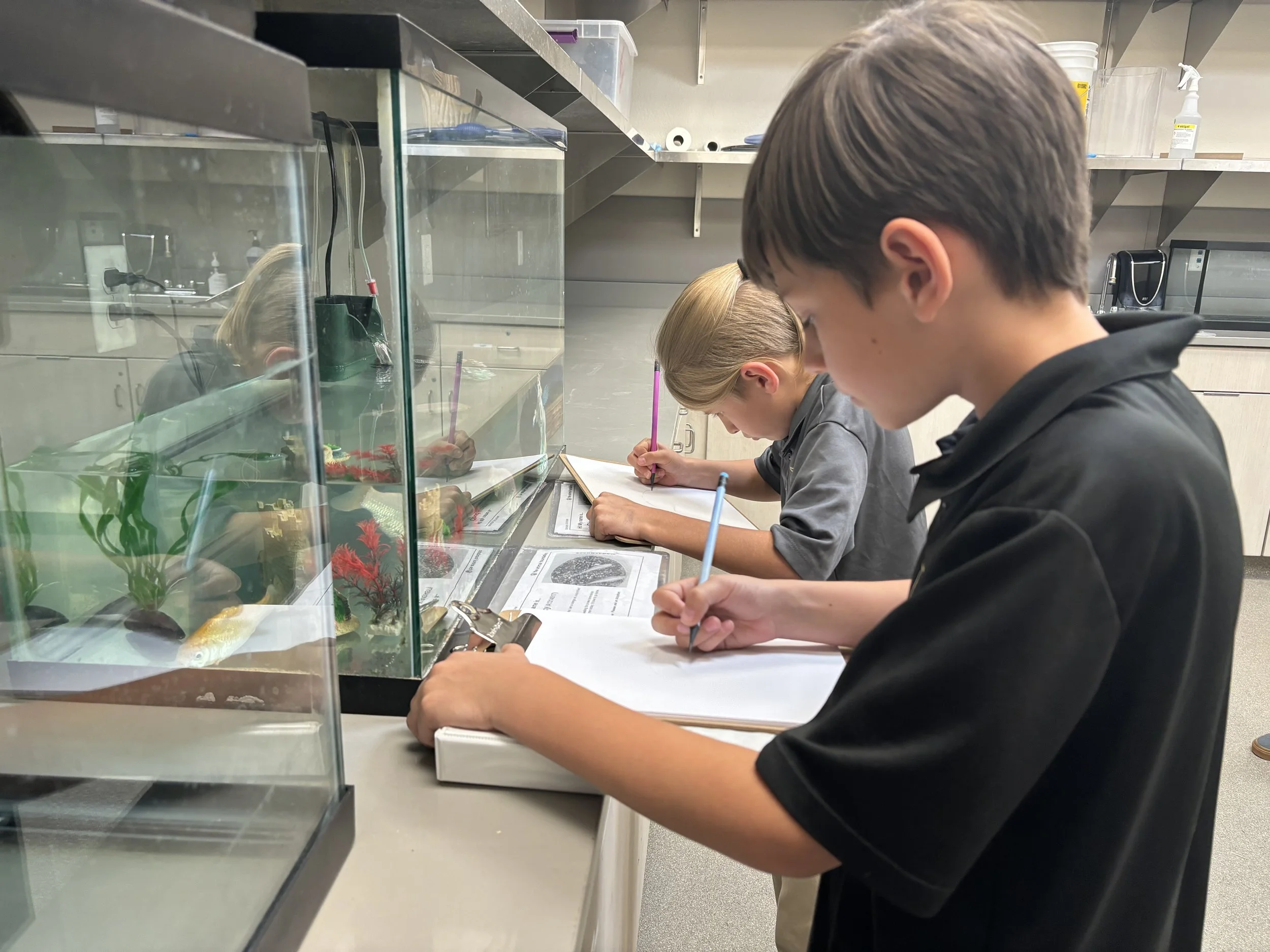
Two kids sketch adoptable pets for The Animal Foundation. Courtesy of The Animal Foundation
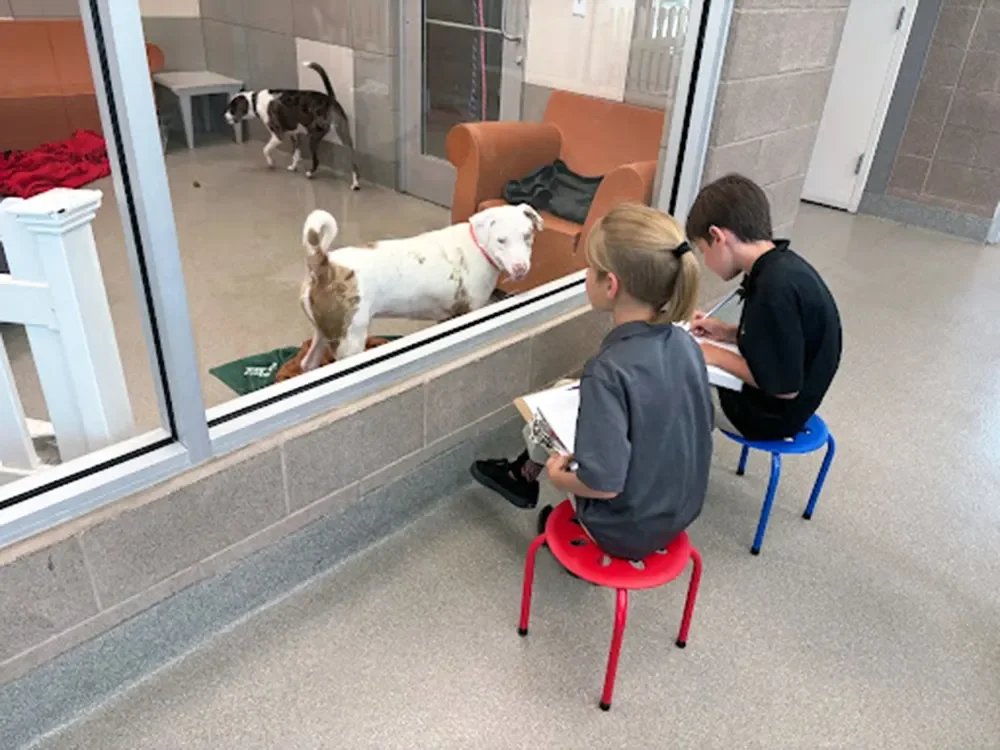
Two kids sketch adoptable pets for The Animal Foundation. Courtesy of The Animal Foundation
Andrew Findley, The Animal Foundation’s Volunteer Coordinator, explains: “The program benefits both children and animals. Just having a child sit calmly and talk to the animals helps them decompress and get them used to being around people, easing the stress of shelter life.”
Back in 2015, the Buonomo family founded their own nonprofit organization, Rescue Advocates of Long Island (RALI), to support local shelters and rescues. From a young age, their children (Brianne was 5; Caitlin, 8; and Brendan, 11) got involved in holiday drives, making Christmas ornaments for The Town of Hempstead Animal Shelter in Wantagh, NY, or painting rocks for a scented garden. Over the years, the Buonomo kids also painted around 400 endearing portraits of dogs and cats who were waiting for homes, focusing on “longtimers” - the animals who have been waiting the longest.

Portraits created by children at Rescue Advocates of Long Island for their local shelter.
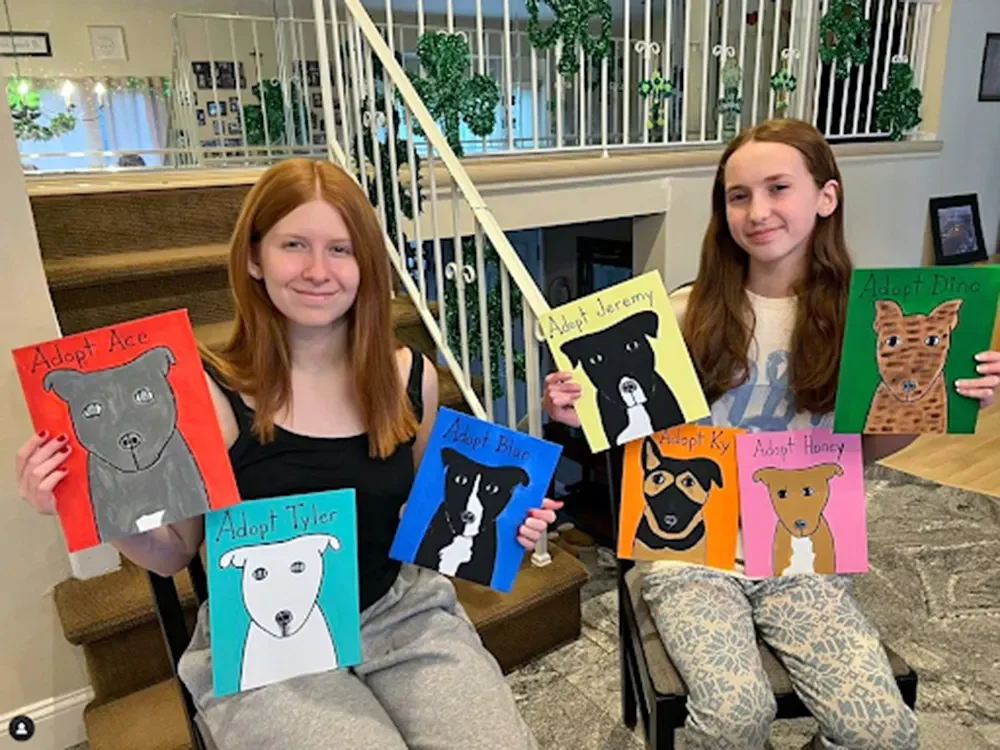
Photo Courtesy of Rescue Advocates of Long Island
EXPLORING EMPATHY
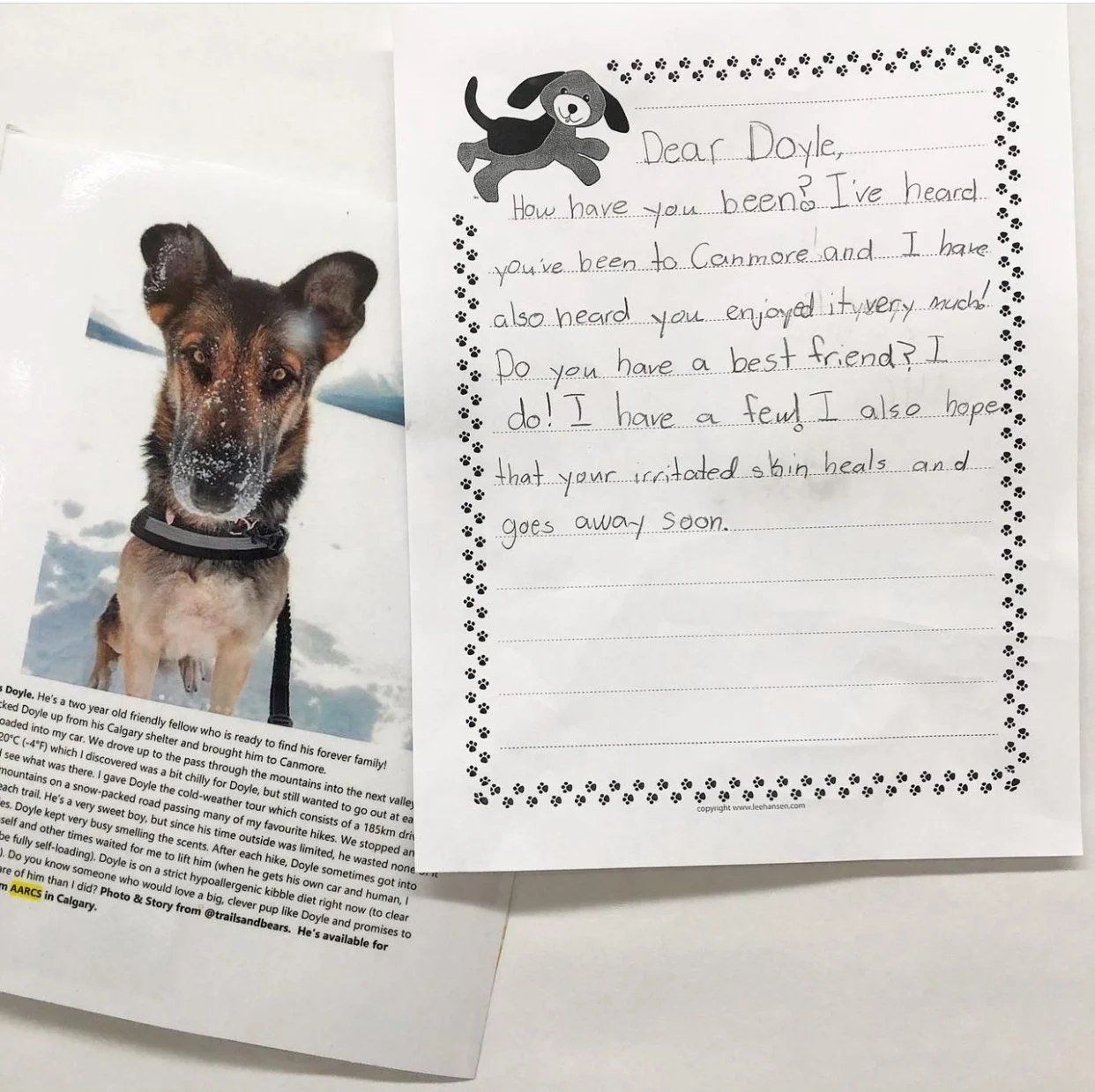
Empathy Pawject
Created by artist, art educator and animal rights advocate Rebecca Carruthers Green, the Empathy Pawject teaches her Grade 4 students in Calgary to use compassion and kindness to help real animals. Through a series of lessons, made available for free online, Becky’s students learn what empathy means; how it differs from compassion, sympathy, and pity; and the importance of treating all living creatures with kindness.
The students receive the profile of a real dog or cat from an animal shelter. They discover that “like humans, all animals are very unique with their own set of likes and dislikes, quirks and wonderfully individual personalities,” Carruthers Green suggests. The young artists paint a portrait of the animal, which is later shared on the Empathy Pawject’s Instagram account to help boost the pet’s adoption profile.

Empathy Pawject
LEARNING TO DEAL WITH DIFFICULT EMOTIONS
Artistic expression benefits a child’s development by providing an outlet for exploring emotions. The Empathy Pawject helps students exercise their empathy, but also learn how to cope with potential negative emotions that come up.

Vic, Jude’s canine subject for Empathy Pawject.
Take Jude. He connected deeply with the story of his dog model, Vic, and experienced deep feelings. “He showed such concern for the dog’s future, asking us if we knew anyone that might adopt him,” his mother, Sally, shared.
The empathy Jude felt extended beyond the dog himself, to the volunteers. “My favourite part,” he expressed, “was seeing how much volunteers care for the dogs, especially when they know if the dogs are adopted, they won’t get to see them ever again.”
At The Animal Foundation, Andrew Findley notices similar connections. A little girl volunteer suddenly asked him: “Do guinea pigs need to be with other guinea pigs?”. Upon learning that yes, they are very social animals and should never be housed alone, the girl declared: “I’m going to tell my mom that my guinea pig at home needs a friend!.”
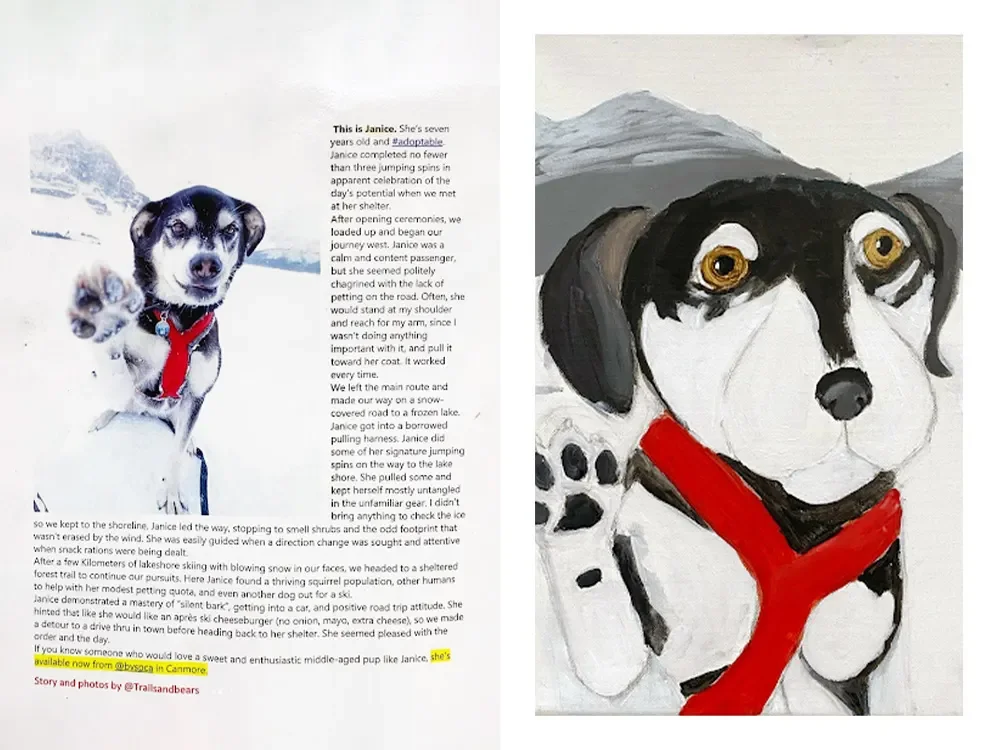
Janice, a rescue pup depicted playing in the snow. Courtesy of Empathy Pawject
REACHING THE COMMUNITY
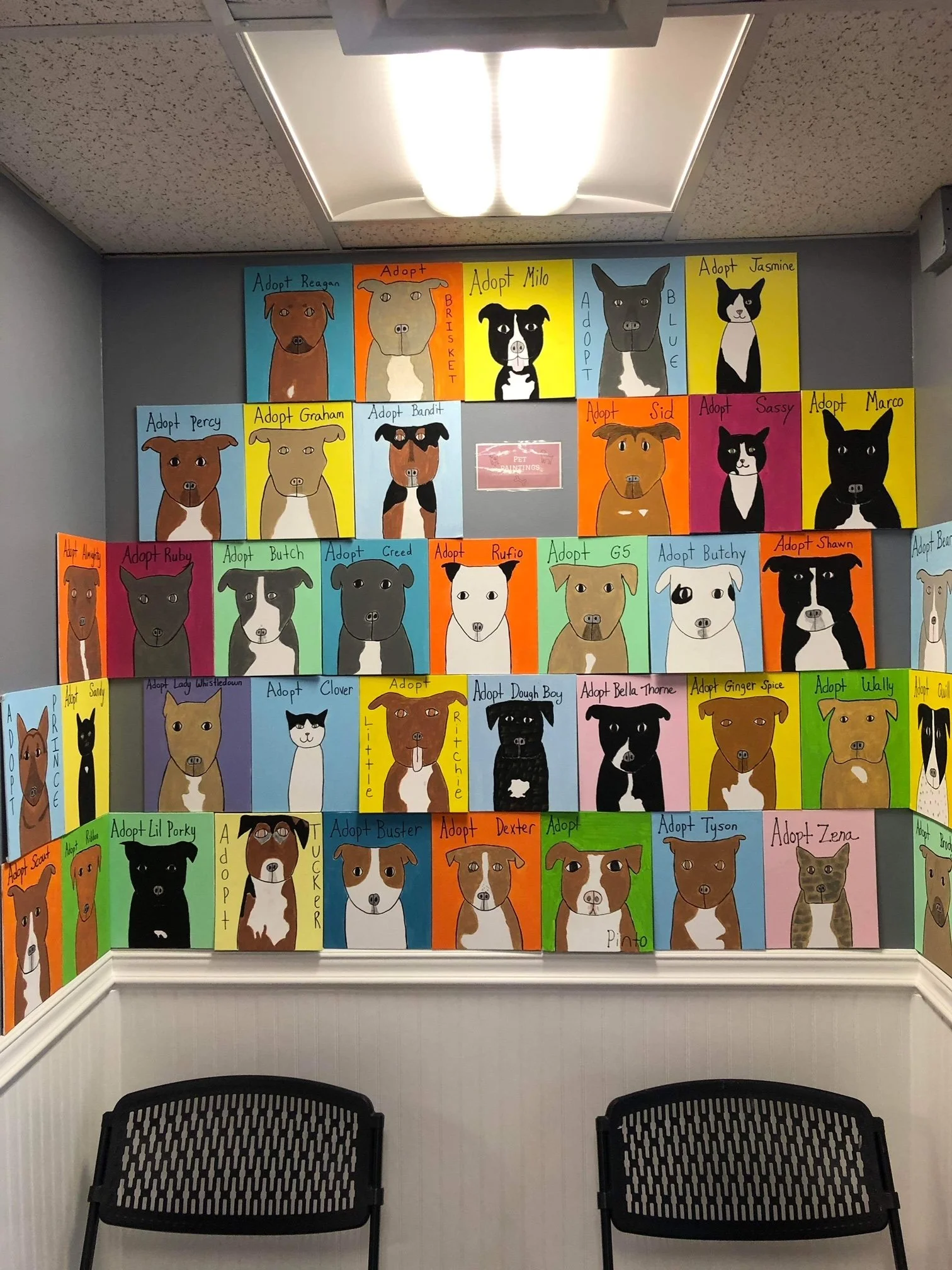
The lobby at the Town of Hempstead Animal Shelter in Wantagh, NY.
In Long Island, RALI’s paintings welcome the public in the shelter’s lobby. “Once a dog or cat is adopted or pulled by a rescue, the painting goes to that adopter or rescue as a gift,” founder Anne Marie Buonomo shares. Years later, some adopters still treasure the painting.
The Calgary Central Public Library hosts a two-month-long exhibit of Empathy Pawject paintings each year. It’s a great way for the young artists to see their work impact the real world, as they celebrate the animals who found homes. Visitors learn about shelter animals through the compassionate lens of children. Sienna, an 11-year-old artist explained: “I loved going to the exhibit. I figured the more people know about the dogs, it will spread around the world and more dogs will get a nice home, like they all deserve.”
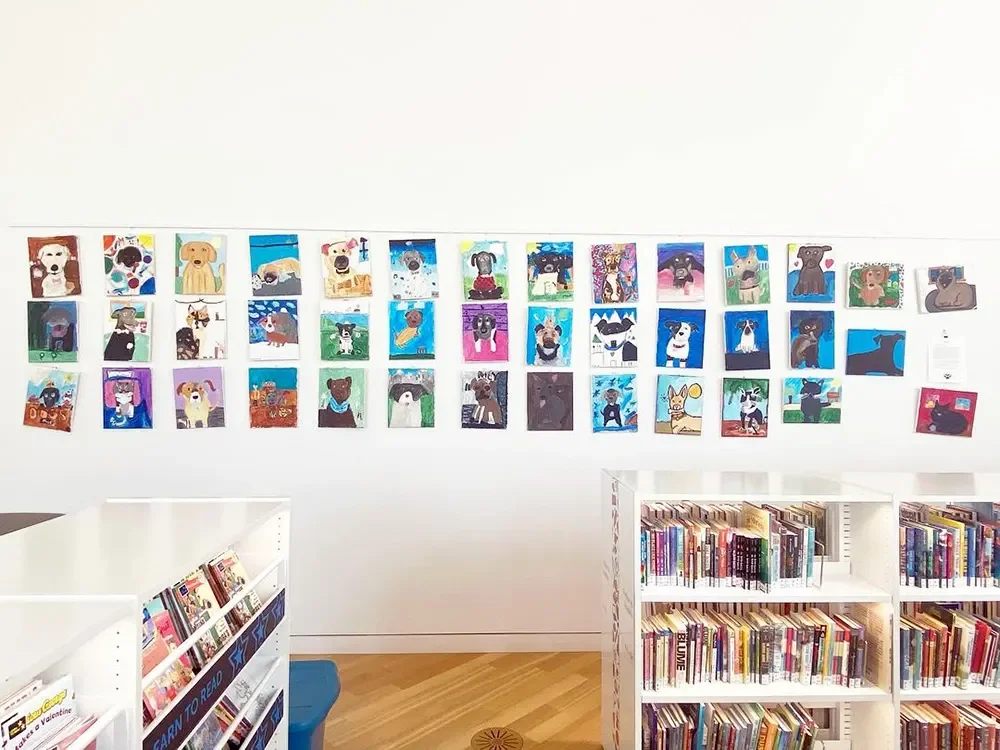
Empathy Pawject exhibit at the Calgary Library.
EMPOWERING YOUNG ADVOCATES
The Empathy Pawject was awarded the Queen’s Platinum Jubilee Medal in 2022, and the Buonomo family received a Citation from the Town of Hempstead. Beyond the recognition, both endeavors have profoundly marked the children. “Not only did the Empathy Pawject impact my daughter’s growth in art, but also her growth in character development,” Michelle, a mother, shared. Jill, another mother, adds: “It gives the children a sense of there being a bigger world out there and that they can help make a difference.”
Brianne Buonomo, who was 5 when RALI was founded and is now 14, still has a burning passion for her mission years later: "Every moment counts. It is my passion to give a voice to the voiceless, and this is something I plan to continue pursuing for years to come."
Helping children realize they have a voice and can use it to bring about change is possibly the most powerful lesson they learn through these programs.
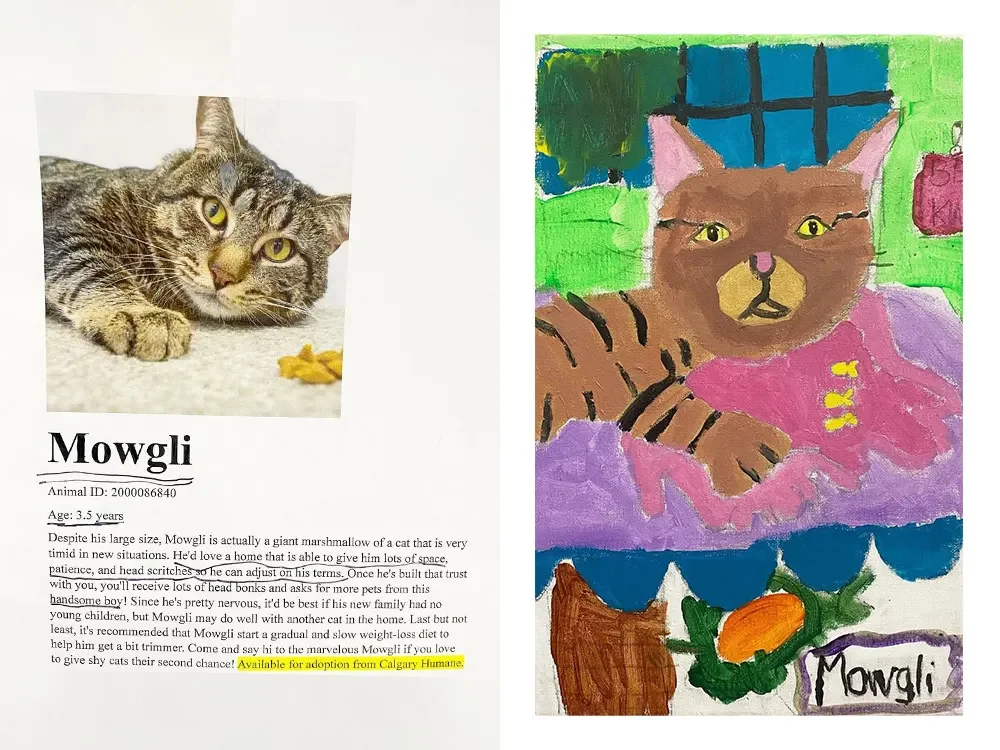
Empathy Pawject
INSPIRED? GET STARTED!
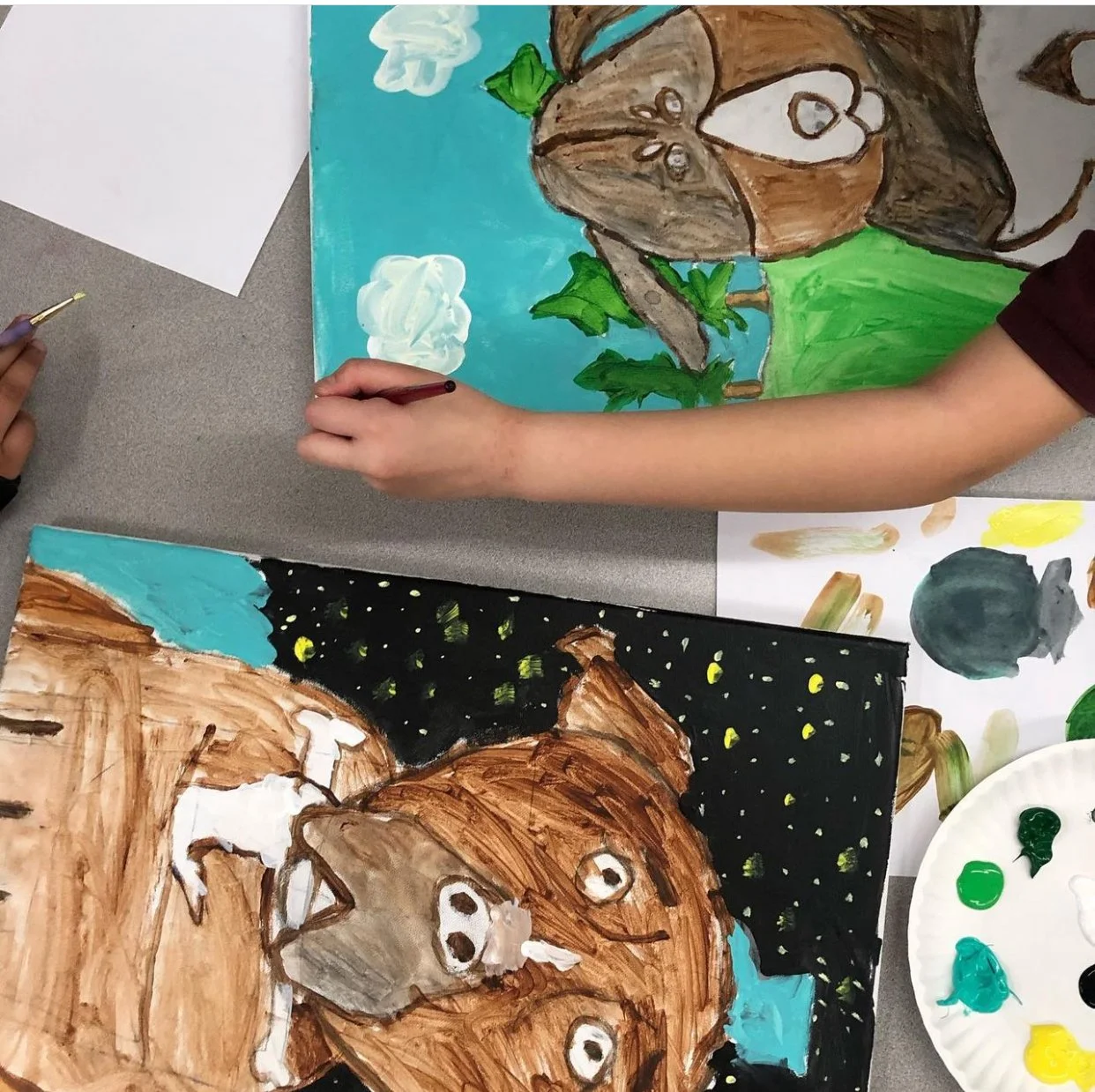
Carruthers Green has made the Empathy Pawject’s lesson plans available for free via her website. Make sure to follow the Empathy Pawject on Instagram @empathy.pawject where the paintings and profiles of the adoptable animals are shared.
Anne Marie Buonomo from RALI suggests that families reach out to their local shelters and rescues to see what kind of help they need. “If one rescue or shelter says ‘no thanks,’ try another one. There are many shelters and rescues out there that would love the help and support,” she says. You can support RALI by donating via their website. Donations help cover the cost of paint, canvases, and art supplies they might need. They have an Amazon Wishlist for their shelter friends, in addition to a Paypal. Follow them on Facebook or Instagram @rescueadvocatesli.
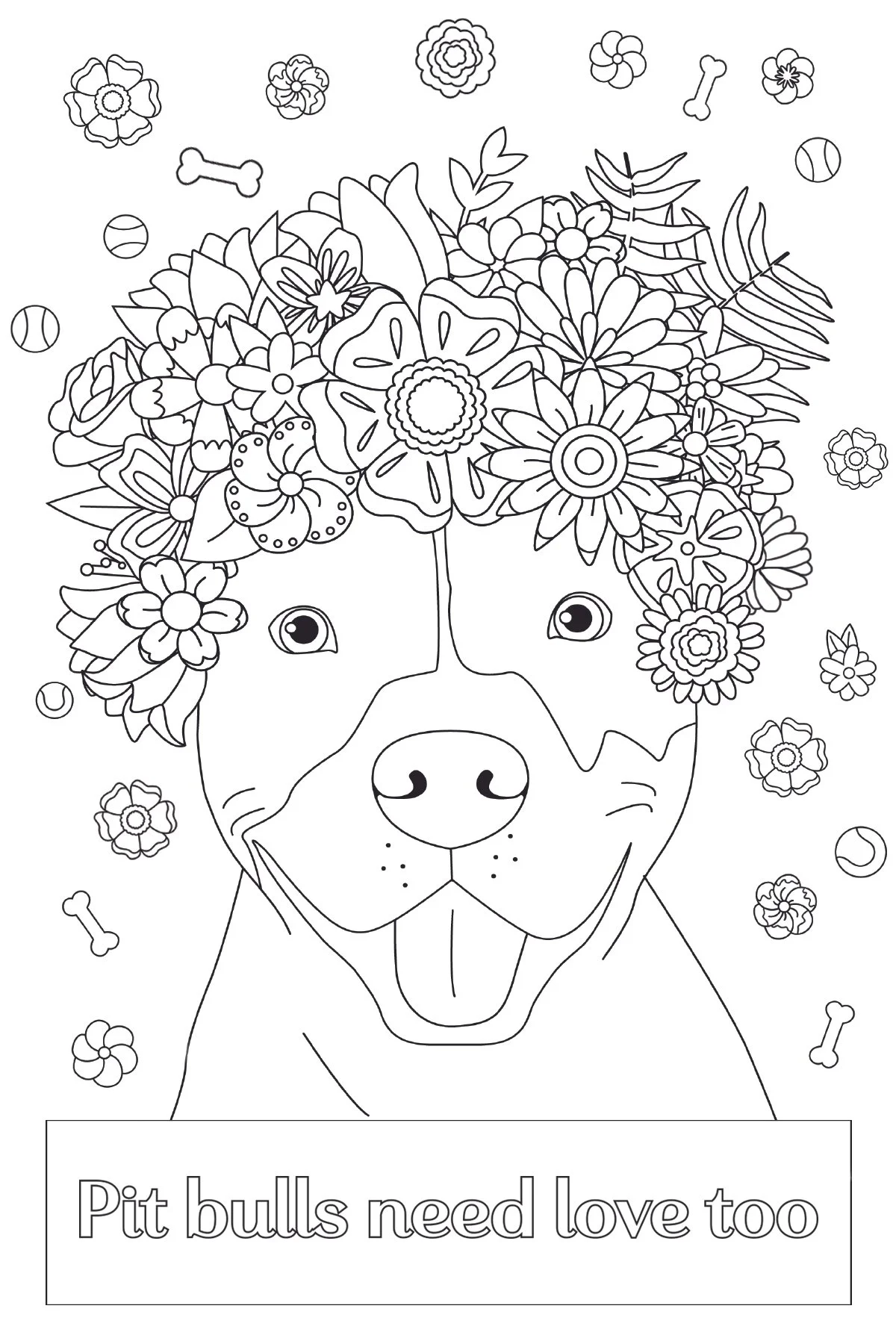
(Sophie’s activities, downloadable PDFs).
If you are looking for a simple way to start, check out these easy activities I created for children who want to explore empathy, showing up, and be a voice for shelter animals, especially pit bulls. From coloring pages to friendship bracelets and adoption flyers you can make at home, you can download these free resources via my website.